English
 Español
 tiếng việt
 русский
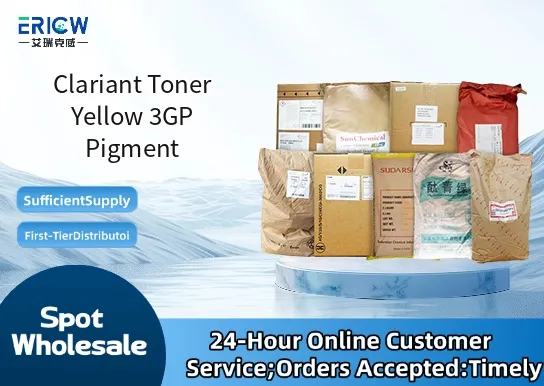
High chroma and excellent color strength for vivid yellow output in electrophotographic toners.
Optimized particle size distribution for superior dispersion stability and consistent jetting performance.
Thermal stability suitable for high-speed fusing processes without pigment degradation or bleed.
Low electrical resistivity enabling efficient charge control in monocomponent and dual-component toner systems.
Compliant with ISO/IEC 19752 and OEM qualification requirements for office and industrial laser printers.
Laser printer toners (monocomponent and dual-component systems).
Digital press toners for commercial and packaging printing.
High-speed production printers requiring consistent color fidelity across extended runs.
Electrophotographic developers used in multifunction peripherals (MFPs) and copiers.
Specialty toners for security documents and brand-critical color applications.
| Chemical Type | Azo pigment (disazo, copper complex) |
| Product Form | Free-flowing dry powder |
| Appearance | Bright greenish-yellow powder |
| Primary Applications | Electrophotographic toners and developers |
| Key Features | High color strength, thermal stability, charge control compatibility |
| Benefits | Consistent print quality, low background staining, extended shelf life |
| Storage Conditions | Store in cool, dry place; protect from moisture and direct sunlight |
| Regulatory Compliance | REACH registered; RoHS compliant; no SVHC above threshold |
Q1: What is the primary application of Clariant Toner Yellow 3GP Pigment?
A: Clariant Toner Yellow 3GP Pigment is specifically engineered for use in dry toner formulations for laser printing and photocopying systems, where high color strength, excellent dispersion stability, and thermal robustness during fusing are essential.
Q2: Is this pigment suitable for both monocomponent and bicomponent toner systems?
A: Yes — Clariant Toner Yellow 3GP Pigment is compatible with both monocomponent and bicomponent toner architectures, offering consistent performance across different charge control mechanisms and carrier interactions.
Q3: How does this pigment perform under high-temperature fusing conditions?
A: It demonstrates excellent thermal stability up to typical fusing temperatures used in modern digital presses, minimizing bleed, aggregation, or hue shift during rapid thermal processing.
Q4: What is the recommended dosage range in toner formulations?
A: Dosage typically ranges from 0.1% to 2% by weight, depending on the desired color strength, base polymer system, and final print density requirements — optimization is recommended via lab-scale trials.
Contact With Us:
E-mail: wangxingqiang@ericwchem.com
Have a Questions? Call Us:
Add:
Building A1, Jiete Industrial Park, Huangpu District, Guangzhou City, Guangdong Province, China