English
 Español
 tiếng việt
 русский
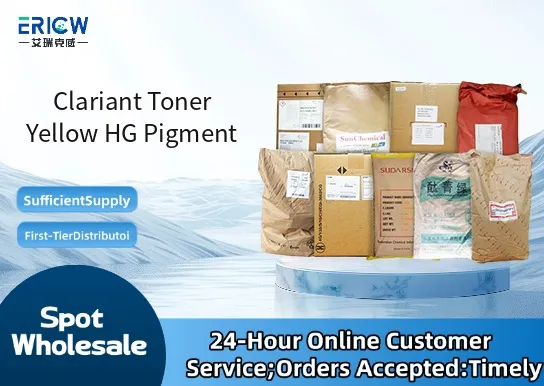
High chroma and excellent color strength for vibrant yellow output in toner formulations.
Superior thermal stability enabling reliable performance during high-speed fusing processes.
Outstanding dispersion stability in polyester-based toner resins, minimizing agglomeration.
Low volatility and minimal odor—ideal for environmentally conscious toner manufacturing.
Consistent batch-to-batch reproducibility supporting stringent OEM quality requirements.
Laser printer toners for office and enterprise printing systems.
Digital copier toners requiring high-resolution image fidelity.
Electrophotographic (EP) toners used in multifunction devices (MFDs).
High-speed production printers demanding robust pigment durability under extended duty cycles.
Energy-efficient toners designed for low-fusing temperature applications.
| Chemical Type | Azo pigment (disazo type) |
| Product Form | Fine dry powder |
| Appearance | Bright yellow free-flowing powder |
| Primary Applications | Electrophotographic toners |
| Key Features | High transparency, excellent lightfastness, good heat resistance |
| Benefits | Improved print density, reduced background scatter, enhanced toner charge stability |
| Storage Conditions | Store in cool, dry place; protect from moisture and direct sunlight |
Q1: What is the primary application of Clariant Toner Yellow HG Pigment?
A: Clariant Toner Yellow HG Pigment is specifically engineered for high-performance electrophotographic toners used in laser printers and digital copiers, where excellent dispersion stability, charge control, and thermal resistance are critical.
Q2: How does this pigment perform under high-temperature fusing conditions?
A: The pigment exhibits good thermal stability during fusing, maintaining color integrity and minimizing bleed or degradation when exposed to typical toner melt temperatures encountered in modern high-speed printing systems.
Q3: Is Clariant Toner Yellow HG Pigment compatible with common toner binder resins?
A: Yes — it demonstrates good compatibility with widely used toner binders such as polyester, styrene-acrylic, and epoxy-modified resins, supporting uniform dispersion and stable triboelectric charging behavior.
Q4: What is the typical dosage range in toner formulations?
A: Dosage depends on formulation requirements and desired color strength, but it is typically used at low concentrations — generally ranging from 0.1% to 2% by weight — to achieve optimal chroma, transparency, and processability.
Q5: Does this pigment require special handling or surface treatment for toner compounding?
A: Clariant Toner Yellow HG Pigment is supplied in a form optimized for toner applications and often includes proprietary surface modification to enhance dispersibility in molten resin and improve interfacial adhesion during melt compounding.
Contact With Us:
E-mail: wangxingqiang@ericwchem.com
Have a Questions? Call Us:
Add:
Building A1, Jiete Industrial Park, Huangpu District, Guangzhou City, Guangdong Province, China