English
 Español
 tiếng việt
 русский
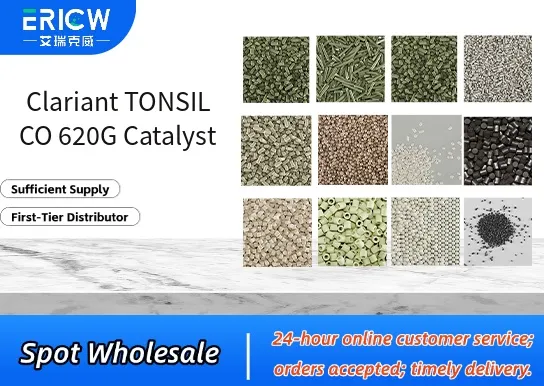
Highly active, acid-treated bentonite-based catalyst optimized for selective decolorization and purification.
Consistent batch-to-batch performance with controlled acidity and surface area for reliable process outcomes.
Low dust generation and excellent flowability for safe, efficient handling in industrial-scale reactors and filter systems.
Environmentally compatible formulation compliant with major regulatory frameworks for food-grade and pharmaceutical intermediates.
Thermally stable up to 250 °C, enabling use in elevated-temperature refining processes without structural degradation.
Refining of edible oils (e.g., soybean, sunflower, and rapeseed oils) to remove pigments, soaps, and oxidation products.
Purification of fatty acid methyl esters (FAME) in biodiesel production prior to final distillation.
Treatment of hydrogenated vegetable oils to improve color stability and reduce peroxide values.
Decolorization and deodorization support in specialty lipid processing for nutraceutical and cosmetic-grade triglycerides.
Catalytic pretreatment of bio-based feedstocks for oleochemical derivatives including fatty alcohols and monoacylglycerols.
| Chemical Type | Acid-activated bentonite clay |
| Product Form | Free-flowing granular solid |
| Appearance | Light grey to beige granules |
| Primary Applications | Edible oil refining, biodiesel purification, oleochemical processing |
| Key Features | Controlled acidity, high surface area, low heavy metal content |
| Benefits | Reduced processing time, improved product clarity, lower catalyst consumption |
| Storage Conditions | Store in dry, cool conditions; protect from moisture and direct sunlight |
| Regulatory Compliance | FDA 21 CFR §173.700, EU Regulation (EC) No 1333/2008 (food contact approved) |
Q1: What is the primary function of TONSIL CO 620G in polymer processing?
A: TONSIL CO 620G is a high-activity, surface-modified bentonite-based catalyst designed to promote controlled crosslinking and thermal stabilization in peroxide-cured elastomers and thermoplastic vulcanizates (TPVs), particularly enhancing scorch safety and cure efficiency.
Q2: Is TONSIL CO 620G compatible with common elastomer systems like EPDM, NR, or SBR?
A: Yes — it demonstrates broad compatibility with natural rubber (NR), synthetic rubbers such as EPDM and SBR, and select thermoplastic matrices used in dynamic vulcanization. Performance may vary depending on compound formulation and processing conditions, so laboratory evaluation is recommended for new applications.
Q3: How should TONSIL CO 620G be incorporated into a rubber compound?
A: It is typically added during the non-productive mixing stage, after polymer incorporation but before curatives. Good dispersion is essential — use standard internal mixers or two-roll mills under controlled temperature and shear conditions to avoid premature activation or agglomeration.
Q4: Does TONSIL CO 620G require special storage or handling precautions?
A: Store in a cool, dry place in original sealed packaging to prevent moisture uptake. While not classified as hazardous under GHS for transport, standard industrial hygiene practices apply — avoid inhalation of dust and use appropriate PPE during manual handling.
Contact With Us:
E-mail: wangxingqiang@ericwchem.com
Have a Questions? Call Us:
Add:
Building A1, Jiete Industrial Park, Huangpu District, Guangzhou City, Guangdong Province, China