English
 Español
 tiếng việt
 русский
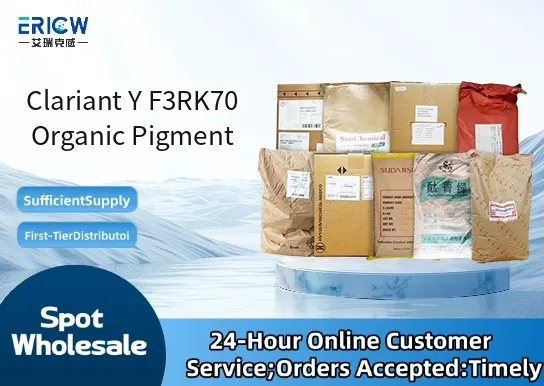
High chroma yellow shade with excellent lightfastness and weather resistance.
Outstanding thermal stability suitable for high-temperature processing up to 240 °C.
Good dispersibility in both polar and non-polar polymer systems.
Low migration behavior, ensuring color consistency in demanding applications.
Compliant with major global regulatory frameworks including REACH and FDA 21 CFR for indirect food contact.
Polyolefin masterbatches (PP, PE) for automotive interior components.
Engineering plastics including ABS and PC for consumer electronics housings.
Flexible PVC compounds used in wire & cable insulation and flooring.
Water-based and solvent-based industrial coatings for metal and plastic substrates.
High-performance inks for packaging gravure and flexographic printing.
| Chemical Type | Benzimidazolone derivative |
| Product Form | Free-flowing powder |
| Appearance | Yellow to orange-yellow fine powder |
| Primary Applications | Polyolefins, engineering plastics, coatings, inks |
| Key Features | High tinctorial strength, low volatility, excellent dispersion |
| Benefits | Color consistency, process robustness, regulatory compliance |
| Density (g/cm³) | 1.55–1.65 |
| Volatile Matter (%, 105 °C) | ≤ 0.5 |
Q1: What is the primary chemical class and typical hue profile of Clariant Y F3RK70?
A: Clariant Y F3RK70 is a high-performance monoazo organic pigment, engineered to deliver a clean, bright yellow shade with excellent chroma and strong tinting strength in demanding applications.
Q2: Is Y F3RK70 suitable for use in food-contact plastics?
A: Y F3RK70 is not certified for direct food-contact applications. It is intended for non-food-contact industrial plastics, coatings, and inks where regulatory compliance for migration is not required.
Q3: How does Y F3RK70 perform in terms of heat stability during polymer processing?
A: This pigment exhibits good thermal stability up to approximately 240–260 °C, making it suitable for standard polyolefin and PS processing conditions, though extended residence times at upper temperature limits may affect color consistency.
Q4: What dispersion methods are recommended for optimal performance in plastic masterbatches?
A: For best results, use high-shear compounding—such as twin-screw extrusion—with optimized screw design and temperature profiling. Pre-wetting or use of compatible carrier resins enhances dispersion uniformity and minimizes agglomerates.
Q5: Can Y F3RK70 be used in combination with other pigments without significant compatibility issues?
A: Yes—Y F3RK70 demonstrates broad compatibility with common organic and inorganic pigments in multi-pigment systems, provided formulation pH, dispersant selection, and thermal history are controlled to avoid interactions affecting hue or stability.
Contact With Us:
E-mail: wangxingqiang@ericwchem.com
Have a Questions? Call Us:
Add:
Building A1, Jiete Industrial Park, Huangpu District, Guangzhou City, Guangdong Province, China