English
 Español
 tiếng việt
 русский
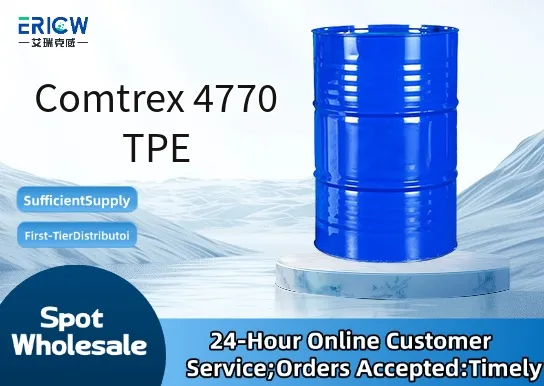
Thermoplastic elastomer with excellent melt processability via injection molding and extrusion.
Outstanding soft-touch feel and high elasticity retention after repeated deformation.
Good resistance to UV exposure and thermal aging up to 70 °C continuous service temperature.
Low extractables profile, compliant with FDA 21 CFR §177.2600 for indirect food contact applications.
Easy colorability with masterbatches and compatible with common polypropylene (PP) and polyethylene (PE) substrates for overmolding.
Soft-grip overmolded handles for power tools and garden equipment.
Ergonomic components in medical devices requiring skin-safe, non-latex elastomeric performance.
Sealing rings and gaskets for consumer appliances and fluid-handling housings.
Flexible hinges and snap-fit closures in durable consumer electronics enclosures.
Interior trim accents and tactile controls in automotive cabin modules.
| Chemical Type | Styrenic Block Copolymer (SBC)-based TPE |
| Product Form | Natural-colored pellets, free-flowing |
| Appearance | Opaque, off-white granules |
| Hardness (Shore A) | 45 ± 3 |
| Melt Flow Rate (230 °C / 2.16 kg) | 18–22 g/10 min |
| Density | 0.91 g/cm³ |
| Key Features | Soft-touch, overmoldable, recyclable, halogen-free |
| Primary Applications | Overmolding, sealing, ergonomic components, consumer durables |
Q1: What is Comtrex 4770 TPE primarily used for?
A: Comtrex 4770 TPE is a thermoplastic elastomer designed to enhance flexibility, impact resistance, and processability in polyolefin-based compounds—commonly applied in soft-touch overmolding, automotive interior trim, consumer product grips, and flexible packaging components.
Q2: Is Comtrex 4770 TPE compatible with polypropylene (PP) and polyethylene (PE) matrices?
A: Yes, Comtrex 4770 TPE exhibits excellent compatibility with both homopolymer and copolymer PP, as well as HDPE and LDPE. It functions effectively as a compatibilizer and impact modifier without requiring additional coupling agents in most standard compounding processes.
Q3: How is Comtrex 4770 TPE typically incorporated into formulations?
A: It is generally introduced during melt compounding—either as a masterbatch or direct feed—using standard twin-screw extruders. Dosage depends on formulation requirements but typically ranges from 0.1% to 2% by weight for surface modification, or up to 30% for dedicated TPE blends targeting enhanced elasticity.
Q4: Does Comtrex 4770 TPE require drying before processing?
A: While Comtrex 4770 TPE has low inherent moisture sensitivity, it is recommended to dry the material at 60–70 °C for 2–4 hours prior to high-temperature processing (>180 °C) to ensure optimal melt stability and minimize potential surface defects.
Contact With Us:
E-mail: wangxingqiang@ericwchem.com
Have a Questions? Call Us:
Add:
Building A1, Jiete Industrial Park, Huangpu District, Guangzhou City, Guangdong Province, China