English
 Español
 tiếng việt
 русский
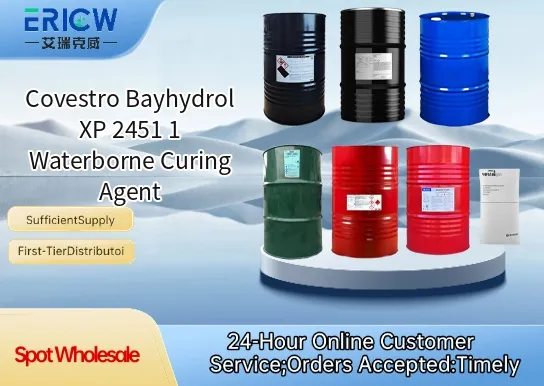
High-performance aliphatic polyisocyanate dispersion for low-VOC, waterborne two-component polyurethane systems.
Excellent hydrolytic stability and storage stability in aqueous media up to 12 months at ambient temperature.
Enables fast ambient-cure film formation with outstanding hardness development and gloss retention.
Provides superior chemical resistance, including against solvents, cleaners, and mild acids.
Low free monomer content (<0.1% HDI trimer), meeting stringent global regulatory and occupational safety requirements.
Architectural and industrial maintenance coatings for metal and concrete substrates.
Waterborne wood finishes requiring high durability and clarity in furniture and flooring applications.
Automotive refinish clearcoats and basecoat/clearcoat systems compliant with regional VOC limits.
Plastic coatings for automotive interior parts and consumer electronics housings.
High-end protective coatings for rail, marine, and agricultural equipment.
| Chemical Type | Aliphatic polyisocyanate (HDI trimer-based) dispersion |
| Product Form | Opaque white to slightly yellow liquid |
| Appearance | Homogeneous aqueous dispersion |
| Solids Content (wt%) | 55–57% |
| pH | 7.5–8.5 |
| Viscosity (mPa·s, 23°C, Brookfield RVT, spindle #3, 2 rpm) | 1,200–2,500 |
| Density (g/cm³, 20°C) | 1.12–1.16 |
| Free Monomer (HDI trimer) | <0.1 wt% |
Q1: What is the primary function of Bayhydrol XP 2451 1 in waterborne coating systems?
A: Bayhydrol XP 2451 1 is a waterborne polyisocyanate curing agent designed to crosslink hydroxyl-functional waterborne resins—such as acrylics, polyesters, or hybrid dispersions—enabling the formation of durable, chemically resistant, and high-performance thermoset films at ambient or low-bake conditions.
Q2: Is Bayhydrol XP 2451 1 compatible with standard waterborne hydroxyl-containing resins?
A: Yes, it is formulated for broad compatibility with common waterborne OH-functional binders. Optimal performance requires careful evaluation of resin selection, pH, co-solvent content, and formulation stability—especially under storage and application conditions.
Q3: How does Bayhydrol XP 2451 1 contribute to VOC reduction in finished coatings?
A: As a waterborne curing agent, it enables high-solids, low-VOC formulations by eliminating or significantly reducing the need for organic solvents typically required with solventborne isocyanates—supporting compliance with evolving environmental regulations and sustainability goals.
Q4: What are key handling and storage considerations for this product?
A: Store in tightly sealed original containers at temperatures between 5 °C and 30 °C, protected from moisture and freezing. Avoid prolonged exposure to humidity or elevated temperatures, which may affect viscosity, shelf life, or reactivity. Always follow good industrial hygiene practices when handling.
Q5: Can Bayhydrol XP 2451 1 be used in coatings intended for food-contact applications?
A: Bayhydrol XP 2451 1 is not pre-approved for direct food-contact use. Formulators must conduct full regulatory assessment—including migration testing and compliance verification—based on the final cured film composition, intended application, and applicable regional food-contact legislation.
Contact With Us:
E-mail: wangxingqiang@ericwchem.com
Have a Questions? Call Us:
Add:
Building A1, Jiete Industrial Park, Huangpu District, Guangzhou City, Guangdong Province, China