English
 Español
 tiếng việt
 русский
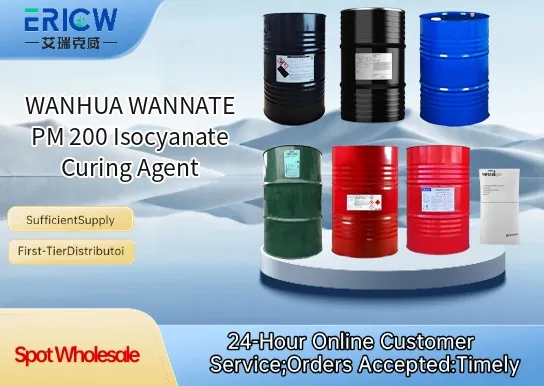
High-reactivity aliphatic isocyanate based on hexamethylene diisocyanate (HDI) trimer chemistry.
Excellent weather resistance and UV stability, ensuring long-term gloss and color retention in coatings.
Low viscosity for easy handling, improved mixing efficiency, and enhanced formulation flexibility.
Non-yellowing performance ideal for high-end clearcoats and topcoat systems.
Compliant with major global VOC regulations and suitable for low-VOC and high-solids coating formulations.
Automotive OEM and refinish clearcoats and basecoats.
Industrial maintenance coatings for machinery, railcars, and agricultural equipment.
High-performance plastic coatings requiring abrasion resistance and optical clarity.
Polyurethane wood finishes for furniture and architectural millwork.
General-purpose two-component polyurethane protective coatings for metal substrates.
| Chemical Type | HDI-based aliphatic isocyanate trimer |
| Product Form | Liquid |
| Appearance | Colorless to pale yellow transparent liquid |
| NCO Content (wt%) | 18.5–19.5% |
| Viscosity at 25°C (mPa·s) | 1,800–2,500 |
| Density at 25°C (g/cm³) | 1.18–1.22 |
| Flash Point (°C, closed cup) | 145–155 |
| Storage Stability | ≥12 months at ≤25°C in sealed original container |
Q1: What is the primary chemical composition of WANHUA WANNATE PM 200?
A: WANHUA WANNATE PM 200 is a polymeric diphenylmethane diisocyanate (pMDI)-based curing agent, formulated to provide consistent reactivity and excellent crosslinking performance in two-component polyurethane systems.
Q2: How should WANHUA WANNATE PM 200 be stored to maintain stability and performance?
A: Store in tightly sealed containers under dry, cool conditions (below 30 °C), away from moisture, direct sunlight, and incompatible materials such as amines or alcohols. Prolonged exposure to humidity may cause gelation or viscosity increase due to premature reaction with water.
Q3: What types of resins or base components is WANHUA WANNATE PM 200 typically compatible with?
A: It is widely used with hydroxyl-terminated polyesters, polyethers, acrylics, and polyester-polyol blends in coatings, adhesives, sealants, and elastomers. Compatibility and pot life depend on the molecular weight and functionality of the polyol component.
Q4: What safety precautions are essential when handling this isocyanate curing agent?
A: As with all isocyanates, avoid inhalation of vapors or aerosols and prevent skin and eye contact. Use appropriate engineering controls (e.g., local exhaust ventilation) and personal protective equipment (chemical-resistant gloves, goggles, and respiratory protection where required). Always consult the Safety Data Sheet (SDS) before use.
Contact With Us:
E-mail: wangxingqiang@ericwchem.com
Have a Questions? Call Us:
Add:
Building A1, Jiete Industrial Park, Huangpu District, Guangzhou City, Guangdong Province, China