English
 Español
 tiếng việt
 русский
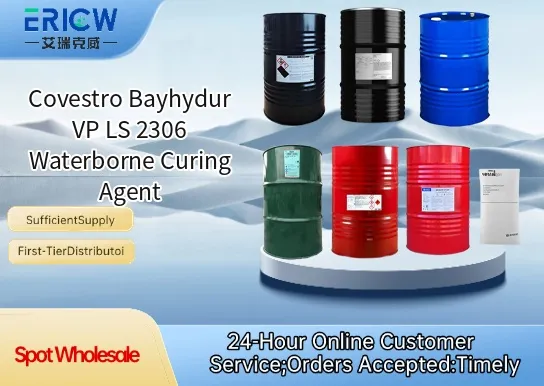
Low-VOC, waterborne aliphatic polyisocyanate dispersion for sustainable coating formulations.
Excellent compatibility with a broad range of waterborne acrylic, polyester, and polyurethane dispersions.
Fast ambient-cure performance without external catalysts, enabling efficient production throughput.
Outstanding hydrolytic stability and storage stability (≥12 months at 5–30 °C).
Provides high gloss, excellent weather resistance, and superior mechanical properties in final films.
Waterborne industrial maintenance coatings for metal substrates.
High-performance wood coatings, including furniture and flooring finishes.
Automotive refinish clearcoats and basecoats requiring low-temperature cure.
Plastic coatings for automotive interior parts and consumer electronics.
Architectural and decorative topcoats for interior applications.
| Chemical Type | Aliphatic polyisocyanate (HDI-based) dispersion |
| Product Form | Opaque white to slightly yellow liquid |
| Appearance | Homogeneous aqueous dispersion |
| Primary Applications | Two-component waterborne polyurethane coatings |
| Key Features | Low VOC, ambient-curing, catalyst-free option |
| Benefits | Reduced emissions, improved workplace safety, enhanced film hardness & flexibility |
| pH (at 25 °C) | 7.5–8.5 |
| Solids Content (wt%) | 30–32% |
Q1: What is the primary function of Bayhydur VP LS 2306 in waterborne coating systems?
A: Bayhydur VP LS 2306 is a water-dispersible polyisocyanate curing agent designed to react with waterborne polyols and amines, enabling the formation of durable, crosslinked polyurethane films without requiring organic co-solvents.
Q2: Is Bayhydur VP LS 2306 compatible with common waterborne acrylic or polyester polyols?
A: Yes — it demonstrates broad compatibility with a range of waterborne hydroxyl-functional resins, including acrylics, polyesters, and hybrid dispersions. Optimal performance depends on careful formulation tuning, especially regarding pH, ionic stabilization, and particle size distribution.
Q3: How does Bayhydur VP LS 2306 contribute to low-VOC compliance?
A: As a solvent-free, water-dispersible curing agent, it eliminates the need for volatile organic solvents typically used in traditional polyisocyanate blends, supporting formulators in meeting stringent regional VOC limits for architectural, industrial, and automotive refinish applications.
Q4: What are typical storage and handling recommendations?
A: Store in tightly sealed original containers at temperatures between 5 °C and 30 °C, away from moisture, strong oxidizers, and direct sunlight. Avoid freezing; if exposure occurs, allow gradual warming to room temperature before use and inspect for homogeneity prior to incorporation.
Contact With Us:
E-mail: wangxingqiang@ericwchem.com
Have a Questions? Call Us:
Add:
Building A1, Jiete Industrial Park, Huangpu District, Guangzhou City, Guangdong Province, China