English
 Español
 tiếng việt
 русский
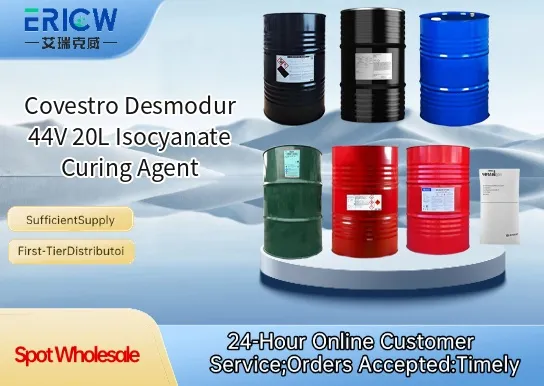
High-reactivity aromatic diisocyanate based on diphenylmethane diisocyanate (MDI) chemistry.
Low monomer content ensures improved workplace safety and reduced inhalation hazard.
Optimized viscosity for easy handling, metering, and mixing with polyol components.
Excellent compatibility with a broad range of polyether and polyester polyols.
Delivers superior mechanical strength, chemical resistance, and thermal stability in cured systems.
Automotive interior and exterior coatings and sealants.
Industrial maintenance and protective coatings for metal substrates.
High-performance elastomers and cast polyurethane parts.
Reaction injection molding (RIM) and reinforced RIM (RRIM) systems.
Two-component polyurethane adhesives and structural bonding formulations.
| Chemical Type | Aromatic diisocyanate (MDI-based) |
| Product Form | Liquid |
| Appearance | Colorless to pale yellow transparent liquid |
| NCO Content (wt %) | 33.5–34.5% |
| Viscosity at 25°C (mPa·s) | 150–250 |
| Density at 20°C (g/cm³) | 1.20–1.23 |
| Storage Stability (unopened, 25°C) | ≥12 months |
| Primary Applications | 2K polyurethane coatings, elastomers, adhesives, sealants |
Q1: What is Desmodur 44V primarily used for?
A: Desmodur 44V is a low-viscosity, aliphatic polyisocyanate curing agent designed for two-component polyurethane systems. It is commonly employed in high-performance coatings requiring excellent UV stability, gloss retention, and chemical resistance—such as industrial maintenance coatings, automotive refinish topcoats, and premium wood finishes.
Q2: How should Desmodur 44V be stored to maintain stability?
A: Store in tightly sealed original containers under dry, cool conditions (ideally below 30 °C) and protected from moisture, direct sunlight, and ambient humidity. Prolonged exposure to air or moisture may cause gelation or increased viscosity due to reaction with water.
Q3: What are key handling and safety considerations?
A: As an isocyanate, Desmodur 44V poses inhalation and dermal sensitization risks. Use only in well-ventilated areas or with appropriate local exhaust ventilation. Always wear nitrile gloves, chemical-resistant goggles, and respiratory protection when spraying or handling uncured material. Avoid skin contact and never ingest.
Q4: Can Desmodur 44V be used with standard polyol resins?
A: Yes—it is compatible with a broad range of hydroxyl-functional resins including polyester, acrylic, and polyether polyols. Optimal performance depends on careful formulation balancing of NCO:OH ratio, catalyst selection, and film thickness. Pre-testing is recommended for new resin combinations.
Q5: Does Desmodur 44V require a catalyst for cure?
A: While it reacts spontaneously with polyols at ambient temperature, cure rate and final film properties can be enhanced using common urethane catalysts such as dibutyltin dilaurate (DBTDL) or tertiary amines. Catalyst type and dosage depend on desired pot life, application method, and curing conditions.
Contact With Us:
E-mail: wangxingqiang@ericwchem.com
Have a Questions? Call Us:
Add:
Building A1, Jiete Industrial Park, Huangpu District, Guangzhou City, Guangdong Province, China