English
 Español
 tiếng việt
 русский
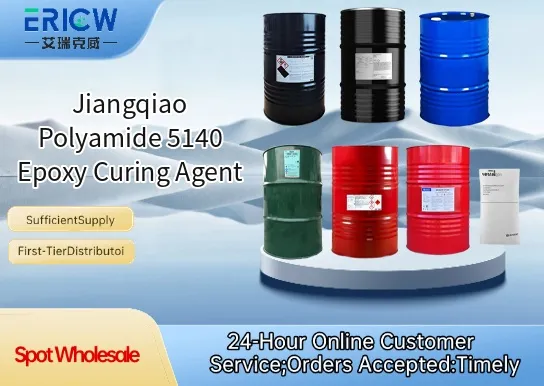
Excellent flexibility and impact resistance in cured epoxy systems.
Low viscosity for easy handling, improved wetting, and reduced air entrapment during mixing.
Good compatibility with standard liquid bisphenol-A and bisphenol-F epoxy resins.
Moderate reactivity enabling extended pot life at room temperature without sacrificing final cure performance.
Enhanced chemical resistance, particularly to alkalis and salt solutions, after full cure.
Protective coatings for marine and offshore steel structures.
Industrial floor coatings requiring abrasion resistance and chemical durability.
Concrete repair mortars and anchoring compounds.
Electrical encapsulation and insulating varnishes for transformers and busbars.
Adhesives for metal-to-metal and metal-to-composite bonding in maintenance applications.
| Chemical Type | Polyamide-based amine curing agent |
| Product Form | Liquid |
| Appearance | Amber to brown viscous liquid |
| Primary Applications | Epoxy coating, adhesive, and grout formulations |
| Key Features | Room-temperature cure, low exotherm, flexible film formation |
| Benefits | Improved adhesion to damp substrates, reduced brittleness, extended working time |
| Storage Stability | 12 months in unopened original packaging at 20–25°C |
| Recommended Mix Ratio (by weight) | 100 parts epoxy resin : 35–45 parts curing agent |
Q1: What is the primary chemical class and typical functionality of Jiangqiao Polyamide 5140?
A: Jiangqiao Polyamide 5140 is a modified aliphatic polyamide curing agent, synthesized from dimerized fatty acids and polyamines. It features multiple secondary amine groups, enabling efficient crosslinking with standard epoxy resins at ambient or slightly elevated temperatures.
Q2: How does Polyamide 5140 compare to conventional amine hardeners in terms of flexibility and moisture resistance?
A: Compared to standard aliphatic amines, Polyamide 5140 delivers enhanced flexibility, improved impact resistance, and superior tolerance to surface moisture and humidity during cure—making it well-suited for coatings and adhesives applied under less-controlled environmental conditions.
Q3: Is Polyamide 5140 compatible with common liquid epoxy resins such as DGEBA types?
A: Yes, Polyamide 5140 exhibits broad compatibility with standard bisphenol-A (DGEBA) and bisphenol-F epoxy resins. It also shows good miscibility with many modified epoxy systems, including those containing reactive diluents or flexibilizers.
Q4: What are the recommended storage conditions to maintain product stability?
A: Store in tightly sealed original containers in a cool, dry, and well-ventilated area away from direct sunlight and strong oxidizing agents. Prolonged exposure to high temperature or humidity may affect viscosity and reactivity over time.
Contact With Us:
E-mail: wangxingqiang@ericwchem.com
Have a Questions? Call Us:
Add:
Building A1, Jiete Industrial Park, Huangpu District, Guangzhou City, Guangdong Province, China