English
 Español
 tiếng việt
 русский
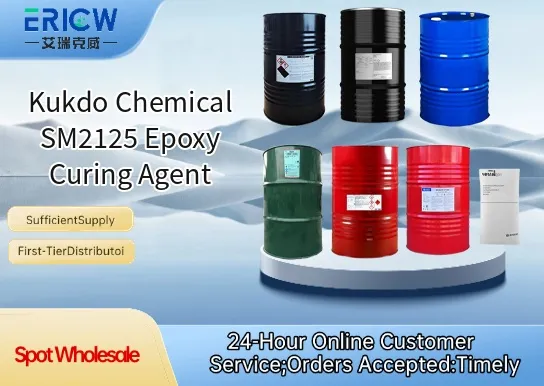
Low-viscosity aliphatic amine-based formulation enabling excellent flow and wetting on substrates.
Fast-reacting at ambient temperature with balanced pot life for efficient processing.
Delivers high mechanical strength and chemical resistance in cured epoxy systems.
Low volatility and reduced amine blush tendency compared to conventional aliphatic amines.
Compatible with standard DGEBA-type epoxy resins without requiring solvents or modifiers.
Structural adhesives for automotive and aerospace assembly.
High-performance coating systems for industrial flooring and tank linings.
Electrical encapsulation and potting compounds for power electronics.
Composite matrix resins in wind blade and marine applications.
Repair mortars and grouts for concrete infrastructure rehabilitation.
| Chemical Type | Aliphatic polyamine |
| Product Form | Liquid |
| Appearance | Clear, pale yellow liquid |
| Density (25°C) | 0.92–0.94 g/cm³ |
| Viscosity (25°C) | 150–250 mPa·s |
| Amine Value | 380–420 mg KOH/g |
| Reactivity Profile | Ambient-curing, exothermic peak ~60–75°C |
| Storage Stability | 12 months under sealed, dry conditions at 5–25°C |
Q1: What type of epoxy systems is SM2125 designed for?
A: SM2125 is a latent, dicyandiamide-based curing agent formulated primarily for one-component (1K) epoxy adhesives, coatings, and powder systems requiring extended shelf life and controlled reactivity at elevated temperatures.
Q2: How does SM2125 compare to standard dicyandiamide (DICY) in terms of handling and dispersion?
A: SM2125 features enhanced surface treatment and particle size control, resulting in improved dispersibility in epoxy resins and reduced dust generation during handling compared to conventional DICY grades.
Q3: What is the typical activation temperature range for full cure with SM2125?
A: Full crosslinking generally initiates above 140 °C and proceeds efficiently between 150–180 °C, depending on resin selection, film thickness, and dwell time. Its latency allows stable processing below 120 °C.
Q4: Is SM2125 compatible with common epoxy accelerators?
A: Yes — SM2125 is compatible with widely used urea derivatives and imidazole-type accelerators, which can be added to fine-tune onset temperature and cure speed without compromising storage stability.
Q5: How should SM2125 be stored to maintain optimal performance?
A: Store in original sealed packaging under cool, dry conditions (below 25 °C and relative humidity <50%). Avoid prolonged exposure to ambient moisture or elevated temperatures prior to use to preserve latency and dispersion characteristics.
Contact With Us:
E-mail: wangxingqiang@ericwchem.com
Have a Questions? Call Us:
Add:
Building A1, Jiete Industrial Park, Huangpu District, Guangzhou City, Guangdong Province, China