English
 Español
 tiếng việt
 русский
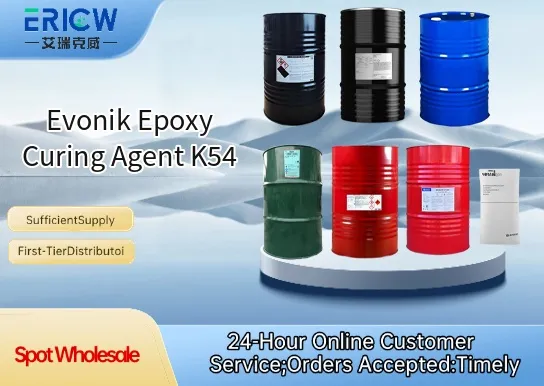
High reactivity with standard epoxy resins, enabling fast cure at ambient or moderate elevated temperatures.
Excellent chemical resistance in cured systems, particularly against alkalis and solvents.
Low viscosity for easy handling, metering, and homogeneous mixing without solvent addition.
Good flexibility and impact resistance in final cured networks, reducing brittleness.
Halogen-free formulation supporting compliance with RoHS and REACH requirements.
Electrical encapsulation and potting compounds for transformers, sensors, and power electronics.
High-performance adhesives for structural bonding in automotive and rail components.
Coating systems for corrosion protection of steel substrates in industrial and marine environments.
Composite matrix resins for fiber-reinforced laminates requiring toughness and thermal stability.
Flooring and grouting systems demanding rapid turnaround and chemical resistance.
| Chemical Type | Aliphatic polyamine adduct |
| Product Form | Liquid |
| Appearance | Pale yellow to amber clear liquid |
| Density (20 °C) | Approx. 0.94–0.96 g/cm³ |
| Viscosity (25 °C) | 300–600 mPa·s |
| Amine Value | 280–320 mg KOH/g |
| Primary Applications | Encapsulation, adhesives, coatings, composites |
| Key Features | Ambient-curable, low volatility, halogen-free, flexible network formation |
Q1: What is the primary function of K54 in epoxy systems?
A: K54 is a specialty amine-based curing agent designed to accelerate epoxy resin crosslinking, particularly in low-temperature or ambient-cure applications. It promotes rapid development of mechanical properties and chemical resistance without requiring extended post-curing.
Q2: Is K54 suitable for food-contact or potable water applications?
A: K54 is not prequalified for direct food-contact or drinking water applications. Its use in regulated end-uses requires full formulation evaluation—including migration testing and regulatory review—by the final product manufacturer in accordance with applicable local and regional requirements.
Q3: How does K54 compare to conventional aliphatic amines in terms of handling and safety?
A: K54 exhibits lower volatility and reduced skin sensitization potential compared to many standard aliphatic amines. It has a milder odor profile and improved handling characteristics, though standard industrial hygiene practices—including gloves, eye protection, and adequate ventilation—remain essential during processing.
Q4: Can K54 be used in combination with other curing agents?
A: Yes, K54 is often blended with complementary hardeners—such as polyamides or aromatic amines—to balance reactivity, pot life, and final performance. Compatibility and cure kinetics should be verified experimentally for each specific resin system and application condition.
Q5: What are typical dosage guidelines for K54?
A: Dosage depends on the epoxy resin type, desired cure profile, and end-use requirements. K54 is typically used at low concentrations—generally ranging from 0.1% to 2% by weight relative to resin—and is often employed as a co-hardener rather than a primary curative.
Contact With Us:
E-mail: wangxingqiang@ericwchem.com
Have a Questions? Call Us:
Add:
Building A1, Jiete Industrial Park, Huangpu District, Guangzhou City, Guangdong Province, China