English
 Español
 tiếng việt
 русский
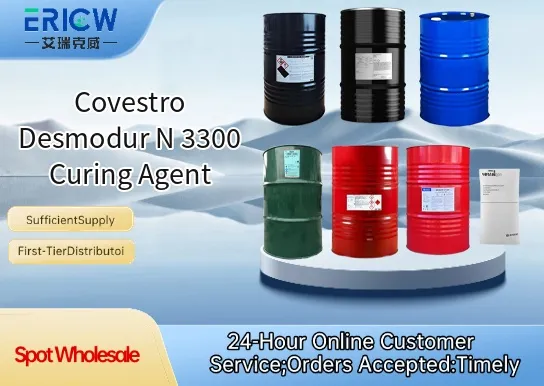
Aliphatic polyisocyanate-based curing agent offering excellent UV stability and color retention.
Low viscosity enables easy handling, precise metering, and efficient mixing with hydroxyl-functional resins.
Provides outstanding chemical resistance, including to solvents, acids, and alkalis, in cured coatings.
Delivers high crosslink density for superior hardness, abrasion resistance, and mechanical durability.
Compliant with major global regulatory frameworks including REACH and VOC-compliant formulations.
High-performance automotive clearcoats and OEM topcoats.
Premium industrial maintenance coatings for machinery and infrastructure.
Architectural and façade coatings requiring long-term gloss and weather resistance.
Plastic coatings for exterior automotive components and consumer electronics housings.
Wood coatings for premium furniture and interior architectural millwork.
| Chemical Type | Aliphatic polyisocyanate (hexamethylene diisocyanate–based) |
| Product Form | Liquid |
| Appearance | Clear, pale yellow liquid |
| NCO Content (wt %) | 15.5 – 16.5 |
| Viscosity at 25 °C (mPa·s) | 800 – 1,200 |
| Density at 20 °C (g/cm³) | 1.17 – 1.21 |
| VOC Content (g/L) | < 100 (as supplied) |
| Primary Applications | Two-component polyurethane coatings (2K PU) |
Q1: What is the primary chemical nature of Desmodur N 3300?
A: Desmodur N 3300 is an aliphatic polyisocyanate based on hexamethylene diisocyanate (HDI), modified as a biuret-type oligomer. It is solvent-free and designed for high-performance two-component polyurethane systems requiring excellent weather resistance and low yellowing.
Q2: Which types of resins is Desmodur N 3300 typically compatible with?
A: It is commonly used with hydroxyl-functional acrylics, polyesters, and polyethers in 2K PU coatings and adhesives. Compatibility should be verified experimentally, especially when incorporating reactive diluents or specialty co-resins.
Q3: How does Desmodur N 3300 compare to aromatic isocyanates in terms of performance?
A: Unlike aromatic isocyanates (e.g., TDI or MDI derivatives), Desmodur N 3300 offers superior UV stability and resistance to yellowing, making it suitable for exterior applications where long-term gloss retention and color fidelity are critical.
Q4: What are key handling and storage recommendations?
A: Store in tightly sealed containers under dry, cool conditions (below 30 °C) and protect from moisture. Prolonged exposure to humidity may cause gelation or viscosity increase due to reaction with ambient water. Always use dry, inert equipment during handling.
Contact With Us:
E-mail: wangxingqiang@ericwchem.com
Have a Questions? Call Us:
Add:
Building A1, Jiete Industrial Park, Huangpu District, Guangzhou City, Guangdong Province, China