English
 Español
 tiếng việt
 русский
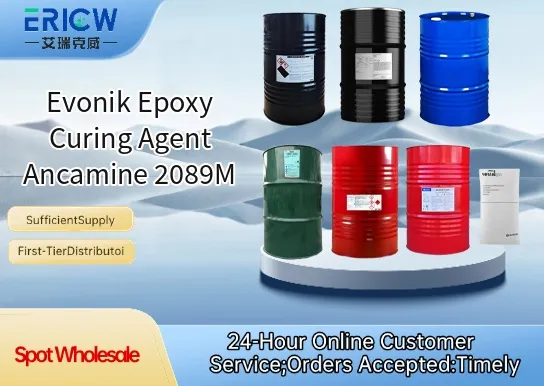
Fast-reacting aliphatic amine curing agent enabling rapid ambient-cure epoxy systems.
Low viscosity (< 500 mPa·s at 25 °C) for excellent mixing and processing with standard epoxy resins.
Good chemical resistance and mechanical performance in cured coatings and adhesives.
Low volatility and reduced amine odor compared to conventional aliphatic amines.
Compatible with common bisphenol-A and bisphenol-F epoxy resins for versatile formulation flexibility.
Industrial maintenance and protective coatings for steel and concrete substrates.
High-performance structural adhesives for metal-to-metal bonding.
Electrical encapsulation and potting compounds requiring fast turnaround.
Repair mortars and grouts in civil engineering and infrastructure projects.
| Chemical Type | Aliphatic polyamine |
| Product Form | Liquid |
| Appearance | Pale yellow to light amber, clear liquid |
| Viscosity (25 °C) | 300–450 mPa·s |
| Amine Value | 360–390 mg KOH/g |
| Density (20 °C) | 0.92–0.95 g/cm³ |
| Flash Point (PMCC) | ≈ 105 °C |
| Primary Applications | Ambient-cure coatings, adhesives, mortars, and encapsulants |
Q1: What is the primary chemical class of Ancamine 2089M?
A: Ancamine 2089M is a modified aliphatic amine curing agent, specifically engineered to provide enhanced reactivity and reduced volatility compared to conventional amine hardeners.
Q2: Is Ancamine 2089M suitable for low-VOC or high-solids epoxy formulations?
A: Yes — its low vapor pressure and high active hydrogen content make it well-suited for formulating low-VOC, high-solids, and solvent-free epoxy systems commonly used in industrial coatings and composites.
Q3: How does Ancamine 2089M compare to standard DETA or DEEDA in terms of pot life and cure speed?
A: It offers a more balanced profile — significantly faster initial cure than many conventional aliphatic amines while maintaining a practical pot life at ambient temperatures, enabling improved productivity without compromising working time.
Q4: Can Ancamine 2089M be used in moisture-cure or one-component epoxy systems?
A: No — it is designed exclusively for two-component (2K) epoxy systems and requires direct mixing with epoxy resins. It is not formulated for latent or moisture-activated cure mechanisms.
Q5: What types of epoxy resins is Ancamine 2089M typically compatible with?
A: It demonstrates broad compatibility with standard liquid and solid bisphenol-A and bisphenol-F epoxy resins, as well as many novolac and cycloaliphatic epoxies — though optimal performance should be verified through formulation testing.
Contact With Us:
E-mail: wangxingqiang@ericwchem.com
Have a Questions? Call Us:
Add:
Building A1, Jiete Industrial Park, Huangpu District, Guangzhou City, Guangdong Province, China