English
 Español
 tiếng việt
 русский
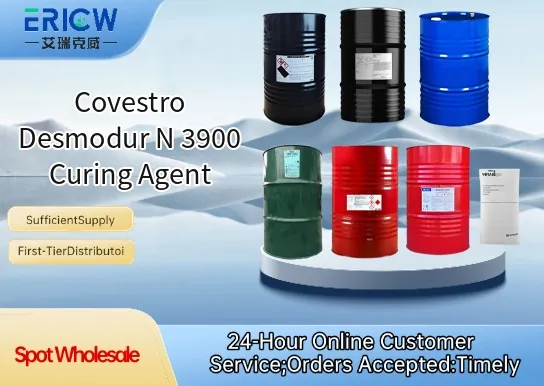
Aliphatic polyisocyanate pre-polymer based on hexamethylene diisocyanate (HDI), offering excellent UV stability and minimal yellowing.
Low-viscosity liquid with good handling properties, enabling easy metering and mixing in automated coating systems.
Reactive NCO content optimized for balanced pot life and rapid film formation at ambient or elevated temperatures.
Complies with REACH and meets stringent VOC regulations for high-performance industrial coatings.
Delivers superior mechanical properties—including hardness, flexibility, and chemical resistance—in cured polyurethane films.
High-gloss automotive clearcoats and refinish topcoats.
Industrial maintenance coatings for machinery, rail vehicles, and agricultural equipment.
Precision optical and electronic protective coatings requiring clarity and durability.
Wood finishing systems where non-yellowing performance and fast throughput are critical.
Aerospace interior coatings meeting fire, smoke, and toxicity (FST) requirements.
| Chemical Type | Aliphatic HDI-based polyisocyanate pre-polymer |
| Product Form | Clear, pale yellow liquid |
| Appearance | Homogeneous, transparent liquid without sediment |
| NCO Content (wt %) | 15.5 – 16.5 |
| Viscosity at 25 °C (mPa·s) | 800 – 1,200 |
| Density at 20 °C (g/cm³) | 1.17 – 1.19 |
| Flash Point (PMCC, °C) | 145 – 155 |
| Solubility | Miscible with common organic solvents (e.g., acetates, ketones, glycol ethers) |
Q1: What is Desmodur N 3900 and how does it function in coating systems?
A: Desmodur N 3900 is a low-viscosity, aliphatic polyisocyanate curing agent based on hexamethylene diisocyanate (HDI) trimer chemistry. It reacts with hydroxyl-functional resins—such as acrylics, polyesters, or polyethers—to form durable, weather-resistant polyurethane coatings. Its trifunctional structure provides good crosslink density while maintaining manageable pot life and film formation properties.
Q2: Is Desmodur N 3900 suitable for high-solids or solvent-reduced formulations?
A: Yes, Desmodur N 3900 is specifically designed for high-solids and low-VOC applications due to its inherently low viscosity and high NCO content. It enables formulators to achieve target solids levels without excessive dilution, supporting compliance with evolving environmental regulations while preserving application performance.
Q3: How should Desmodur N 3900 be stored and handled to maintain stability?
A: Store in tightly sealed containers under dry, cool conditions (preferably below 30 °C) and protect from moisture, heat, and direct sunlight. Exposure to humidity may cause gelation or CO₂ evolution due to reaction with water. Always use dry handling equipment and avoid contact with incompatible materials such as strong bases or primary amines.
Q4: Can Desmodur N 3900 be used in food-contact or pharmaceutical-grade coatings?
A: Desmodur N 3900 is not pre-qualified for direct food-contact applications. Its suitability for such uses depends entirely on the final cured system’s compliance with applicable regulatory frameworks—and requires full formulation testing, including migration assessment and end-use validation by the coating manufacturer.
Q5: What are typical pot life considerations when using Desmodur N 3900?
A: Pot life varies depending on resin type, catalyst presence, temperature, and humidity—but generally ranges from several hours to over a day under standard ambient conditions. Formulations benefit from careful stoichiometric balance (NCO:OH ratio) and optional catalyst selection to tailor reactivity for specific production needs.
Contact With Us:
E-mail: wangxingqiang@ericwchem.com
Have a Questions? Call Us:
Add:
Building A1, Jiete Industrial Park, Huangpu District, Guangzhou City, Guangdong Province, China