English
 Español
 tiếng việt
 русский
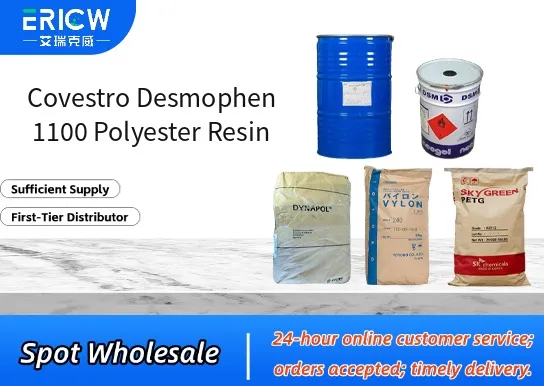
Low-viscosity aliphatic polyester polyol designed for high-reactivity two-component polyurethane systems.
Excellent hydrolytic stability and weather resistance due to saturated backbone structure.
Provides outstanding flexibility, impact resistance, and low-temperature performance in cured films.
Compatible with isocyanates including HDI, IPDI, and H12MDI for durable coating and adhesive formulations.
Supports VOC-compliant formulations with low residual monomer content and minimal odor.
High-performance industrial maintenance coatings for metal and concrete substrates.
Durable topcoats for transportation equipment including railcars and agricultural machinery.
Flexible polyurethane adhesives for composite lamination and automotive interior bonding.
UV-stable clearcoats for architectural façade systems and prefabricated concrete elements.
Base resins for abrasion-resistant flooring systems in commercial and industrial facilities.
| Chemical Type | Aliphatic polyester polyol |
| Product Form | Liquid |
| Appearance | Clear, pale yellow liquid |
| Hydroxyl Number (mg KOH/g) | 56–64 |
| Acid Number (mg KOH/g) | ≤ 1.0 |
| Viscosity at 25 °C (mPa·s) | 1,800–2,400 |
| Functionality (OH groups/molecule) | ~2.0 |
| Water Content (wt %) | ≤ 0.10 |
Q1: What is the primary function of Desmophen 1100 in polyurethane systems?
A: Desmophen 1100 is a low-viscosity, aliphatic polyester polyol designed to serve as a reactive soft segment component in thermoplastic polyurethanes (TPUs), cast elastomers, and coatings. It contributes flexibility, hydrolytic stability, and good low-temperature performance while supporting processability in melt- or solvent-based formulations.
Q2: Is Desmophen 1100 suitable for applications requiring UV resistance?
A: Yes — as an aliphatic polyester polyol, Desmophen 1100 supports the formulation of light-stable, non-yellowing polyurethane products. When combined with aliphatic isocyanates (e.g., HDI or IPDI derivatives), it enables durable coatings, elastomers, and adhesives intended for outdoor or UV-exposed service environments.
Q3: How does Desmophen 1100 compare to aromatic polyester polyols in terms of hydrolytic stability?
A: Desmophen 1100 offers enhanced hydrolytic resistance compared to many aromatic polyester polyols due to its aliphatic backbone and carefully selected diol/diacid composition. This makes it particularly well-suited for applications exposed to humidity, condensation, or repeated thermal cycling where long-term molecular integrity is critical.
Q4: Can Desmophen 1100 be used in solvent-free or high-solids coating systems?
A: Yes — its relatively low viscosity and absence of volatile organic components make Desmophen 1100 compatible with high-solids, low-VOC, and 100%-solid polyurethane coating formulations. Formulators often select it to help balance reactivity, film formation, and final mechanical properties without relying on high-boiling solvents.
Contact With Us:
E-mail: wangxingqiang@ericwchem.com
Have a Questions? Call Us:
Add:
Building A1, Jiete Industrial Park, Huangpu District, Guangzhou City, Guangdong Province, China