English
 Español
 tiếng việt
 русский
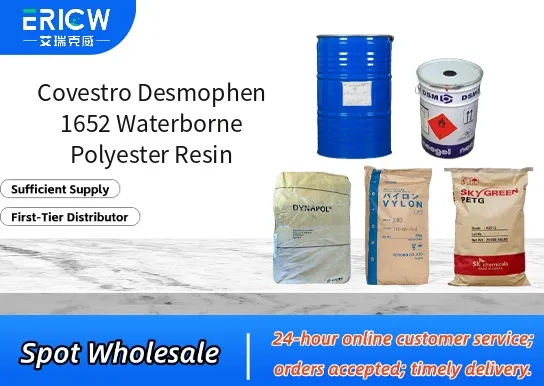
Low-VOC, waterborne formulation compliant with stringent environmental regulations.
Excellent hydrolytic stability and storage stability in aqueous dispersion.
Good compatibility with acrylics, polyurethane dispersions, and crosslinkers (e.g., melamine or aziridine).
Enables high-gloss, durable film formation with balanced hardness and flexibility.
Designed for ambient- or low-bake curing, supporting energy-efficient coating processes.
Waterborne industrial maintenance coatings for metal substrates.
Architectural and decorative coatings for interior wood and metal surfaces.
Coatings for furniture and kitchen cabinets requiring low-emission finishes.
Refinish coatings for automotive plastic trim and non-structural components.
Functional topcoats in coil coating pre-treatment systems.
| Chemical Type | Aliphatic waterborne polyester dispersion |
| Product Form | Aqueous dispersion |
| Appearance | Clear to slightly hazy, light yellow liquid |
| pH (at 20 °C) | 7.5 – 8.5 |
| Solids Content (wt.%) | 45 – 47 |
| Viscosity (mPa·s, Brookfield LVT, spindel #3, 20 rpm, 23 °C) | 150 – 300 |
| Density (g/cm³, 20 °C) | 1.02 – 1.05 |
| Minimum Film Formation Temperature (MFFT) | ≈ 15 °C |
Q1: What is the primary function of Desmophen 1652 in waterborne coating systems?
A: Desmophen 1652 functions as a reactive polyol component in two-component waterborne polyurethane systems, contributing to film formation, flexibility, and chemical resistance while enabling low-VOC formulations.
Q2: Is Desmophen 1652 compatible with common waterborne isocyanate hardeners?
A: Yes, it is specifically designed for use with aliphatic water-dispersible isocyanates—such as HDI- and IPDI-based polyisocyanates—and exhibits good compatibility and reactivity under standard ambient curing conditions.
Q3: How does Desmophen 1652 support sustainability goals in industrial coatings?
A: As a waterborne polyester polyol, it enables formulators to significantly reduce solvent content versus solvent-borne alternatives, supporting compliance with evolving VOC regulations and lowering the environmental footprint of high-performance protective and decorative coatings.
Q4: What are typical storage and handling recommendations for this resin?
A: Store in original sealed containers at temperatures between 5 °C and 30 °C, protected from freezing and prolonged exposure to direct sunlight or moisture. Prior to use, ensure thorough mixing to maintain homogeneity, especially after extended storage.
Contact With Us:
E-mail: wangxingqiang@ericwchem.com
Have a Questions? Call Us:
Add:
Building A1, Jiete Industrial Park, Huangpu District, Guangzhou City, Guangdong Province, China