English
 Español
 tiếng việt
 русский
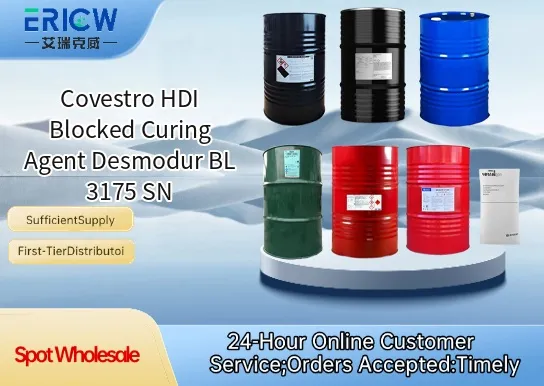
Thermally reversible blocking with caprolactam, enabling low-temperature processing and high-temperature cure activation.
Excellent storage stability at ambient temperature due to fully blocked isocyanate functionality.
Enables one-component (1K) formulations with extended pot life and reduced handling complexity.
Delivers superior film hardness, chemical resistance, and weatherability in final cured coatings.
Compatible with hydroxyl-functional acrylics, polyesters, and alkyds for versatile resin system integration.
Automotive OEM clearcoats and basecoat/clearcoat systems.
Industrial maintenance coatings for metal substrates requiring durability and corrosion resistance.
High-performance coil coatings for pre-painted metal applications.
Architectural and façade coatings demanding UV stability and long-term gloss retention.
Plastic coatings for automotive interior and exterior trim components.
| Chemical Type | HDI-based aliphatic polyisocyanate, caprolactam-blocked |
| Product Form | Liquid |
| Appearance | Clear, pale yellow liquid |
| Primary Applications | 1K thermosetting coatings for automotive, industrial, and architectural use |
| Key Features | Blocked NCO functionality, low volatility, thermal deblocking onset ~130 °C |
| Benefits | Improved workplace safety, simplified formulation, enhanced storage stability |
| Solubility | Compatible with common organic solvents (e.g., xylene, butyl acetate, PGMEA) |
| Storage Conditions | Store in tightly closed containers at 15–25 °C; avoid moisture and elevated temperatures |
Q1: What is the primary function of Desmodur BL 3175 SN in coating formulations?
A: Desmodur BL 3175 SN is a blocked aliphatic isocyanate curing agent designed to provide thermal activation and improved pot life in two-component polyurethane systems. It enables stable one-pot formulation with hydroxyl-functional resins while releasing reactive HDI isocyanate groups upon heating for crosslinking.
Q2: At what temperature range does Desmodur BL 3175 SN typically unblock and initiate crosslinking?
A: Unblocking begins gradually above approximately 120 °C and proceeds efficiently within the range of 130–160 °C, depending on formulation composition, film thickness, and heating profile. Optimal cure performance is generally achieved with dwell times of several minutes at target temperature.
Q3: Which types of hydroxyl-functional resins is Desmodur BL 3175 SN commonly compatible with?
A: It demonstrates good compatibility with a broad range of hydroxyl-containing binders, including acrylic polyols, polyester polyols, and alkyd resins. Compatibility and reactivity should be verified experimentally for each specific resin system due to variations in hydroxyl value, steric hindrance, and acid number.
Q4: How does Desmodur BL 3175 SN contribute to the final coating properties?
A: When fully cured, it delivers excellent chemical resistance, hardness, and weather stability—characteristic of HDI-based polyurethanes—while supporting low-VOC, solvent-borne or high-solids formulations. The blocked nature also supports improved storage stability and reduced NCO handling risks during production.
Q5: Is Desmodur BL 3175 SN suitable for ambient-cure applications?
A: No—it is specifically engineered for thermally activated curing. Ambient-cure performance is very limited; formulations relying solely on Desmodur BL 3175 SN without thermal input will exhibit minimal crosslinking and poor film development.
Contact With Us:
E-mail: wangxingqiang@ericwchem.com
Have a Questions? Call Us:
Add:
Building A1, Jiete Industrial Park, Huangpu District, Guangzhou City, Guangdong Province, China