English
 Español
 tiếng việt
 русский
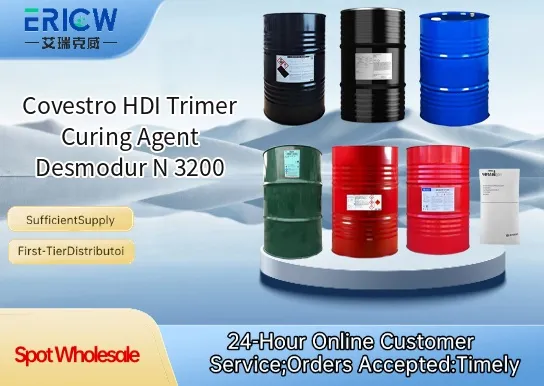
Low-viscosity aliphatic polyisocyanate trimer based on hexamethylene diisocyanate (HDI), enabling easy handling and formulation without reactive diluents.
Excellent weathering resistance and UV stability, ensuring long-term gloss retention and color stability in outdoor applications.
Fast curing kinetics at ambient or elevated temperatures, supporting high-efficiency industrial coating processes.
Low monomer HDI content (<0.5%), meeting stringent occupational health and safety requirements for workplace exposure.
Compatible with a broad range of hydroxyl-functional resins including acrylics, polyesters, and polyethers for versatile two-component polyurethane systems.
Aerospace coatings requiring high durability, chemical resistance, and compliance with aviation material standards.
Automotive OEM and refinish topcoats where exceptional clarity, hardness, and scratch resistance are critical.
Industrial maintenance coatings for machinery, steel structures, and offshore equipment exposed to harsh environments.
High-performance wood finishes for premium furniture and architectural millwork demanding low VOC and excellent film formation.
Plastic coatings for automotive interior trim and consumer electronics housings requiring flexibility and adhesion.
| Chemical Type | Aliphatic HDI-based polyisocyanate trimer |
| Product Form | Liquid |
| Appearance | Colorless to pale yellow clear liquid |
| NCO Content (wt %) | 17.5–18.5 |
| Viscosity at 25 °C (mPa·s) | 800–1200 |
| Density at 20 °C (g/cm³) | 1.16–1.19 |
| Monomeric HDI Content (wt %) | ≤ 0.5 |
| Flash Point (PMCC, °C) | ≥ 140 |
Q1: What is the primary function of Desmodur N 3200 in coating and adhesive formulations?
A: Desmodur N 3200 is an aliphatic HDI-based trimer isocyanate curing agent designed to react with hydroxyl-functional resins (e.g., polyesters, acrylics, or polyethers) to form durable, weather-resistant polyurethane networks. It enables excellent gloss retention, UV stability, and mechanical performance in high-end industrial and automotive topcoats.
Q2: How does Desmodur N 3200 differ from other HDI trimers in terms of viscosity and handling?
A: Desmodur N 3200 is formulated as a low-viscosity liquid at room temperature, offering improved processability compared to higher-viscosity HDI trimers. Its consistent fluidity supports easy metering, efficient mixing, and compatibility with standard spray and roller application equipment without requiring excessive solvent dilution.
Q3: Is Desmodur N 3200 suitable for low-VOC or high-solids coating systems?
A: Yes — Desmodur N 3200 is widely used in high-solids and solvent-borne systems targeting reduced VOC emissions. Its high functionality and reactivity allow formulators to achieve target film properties with lower overall solvent demand, supporting compliance with evolving environmental regulations for industrial coatings.
Q4: What are typical pot life considerations when using Desmodur N 3200 with common OH-resins?
A: Pot life depends strongly on resin type, catalyst presence, temperature, and NCO:OH ratio. With conventional polyester or acrylic polyols and no strong catalysts, usable pot life typically ranges from several hours to over a day at 23 °C. Accelerated cure profiles can be achieved via heat or catalysis, while ambient-cure formulations benefit from its balanced reactivity.
Contact With Us:
E-mail: wangxingqiang@ericwchem.com
Have a Questions? Call Us:
Add:
Building A1, Jiete Industrial Park, Huangpu District, Guangzhou City, Guangdong Province, China