English
 Español
 tiếng việt
 русский
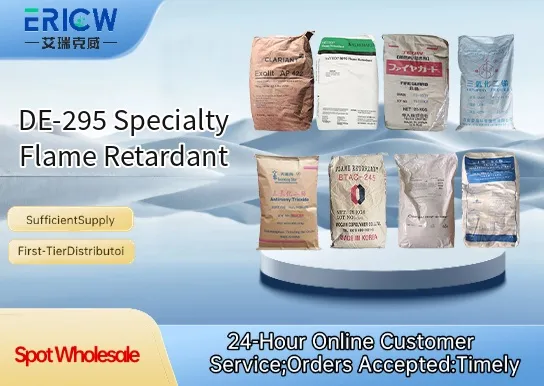
Halogen-free formulation for low smoke and low toxicity during combustion.
Excellent thermal stability, maintaining performance up to 300 °C in polymer matrices.
High phosphorus content enabling efficient char formation and flame inhibition.
Good compatibility with engineering thermoplastics including polyamide (PA6, PA66) and polybutylene terephthalate (PBT).
Non-migrating design ensures long-term flame-retardant efficacy and surface integrity.
Electrical and electronic enclosures requiring UL 94 V-0 rating.
Automotive interior components such as connectors, fuse boxes, and sensor housings.
3D printing filaments for flame-retardant functional prototypes and end-use parts.
High-performance wire and cable jacketing for industrial and transportation systems.
LED lighting housings and heat-dissipating structural parts.
| Chemical Type | Organophosphorus compound (phosphinate-based) |
| Product Form | Fine white powder |
| Appearance | White to off-white free-flowing powder |
| Primary Applications | Flame retardancy in engineering thermoplastics (PA, PBT, PC/ABS) |
| Key Features | Halogen-free, RoHS-compliant, REACH registered |
| Benefits | Enables V-0 rating at low loading (12–18 wt%), minimal impact on mechanical properties |
| Density (g/cm³) | 1.52 ± 0.03 |
| Decomposition Onset Temperature (°C) | ≥280 (TGA, 10 °C/min, N₂) |
Q1: What types of polymers is DE-295 compatible with?
A: DE-295 is formulated for compatibility with a broad range of thermoplastics and thermosets, including polyolefins (e.g., PP, PE), engineering plastics (e.g., PA, PBT), and certain elastomeric systems. Compatibility should be verified experimentally in the target matrix due to formulation-specific interactions.
Q2: How is DE-295 typically incorporated into polymer formulations?
A: DE-295 is generally introduced during melt compounding—via side-feeding or masterbatch dilution—and disperses effectively under standard extrusion conditions. Pre-drying is not required, but uniform feeding and adequate shear are recommended to ensure homogeneous distribution.
Q3: Does DE-295 affect the mechanical properties or processing behavior of the final compound?
A: When used within its typical dosage range, DE-295 is designed to minimize adverse impact on tensile strength, impact resistance, and melt flow. Some formulations may experience slight reductions in elongation at break or require minor adjustments to processing temperatures—evaluation in the end-use application is advised.
Q4: Is DE-295 suitable for applications requiring halogen-free flame retardancy?
A: Yes, DE-295 is a non-halogenated specialty flame retardant based on phosphorus chemistry, supporting compliance with halogen-free design requirements in electronics, transportation, and building materials where low smoke and reduced corrosivity are priorities.
Contact With Us:
E-mail: wangxingqiang@ericwchem.com
Have a Questions? Call Us:
Add:
Building A1, Jiete Industrial Park, Huangpu District, Guangzhou City, Guangdong Province, China