English
 Español
 tiếng việt
 русский
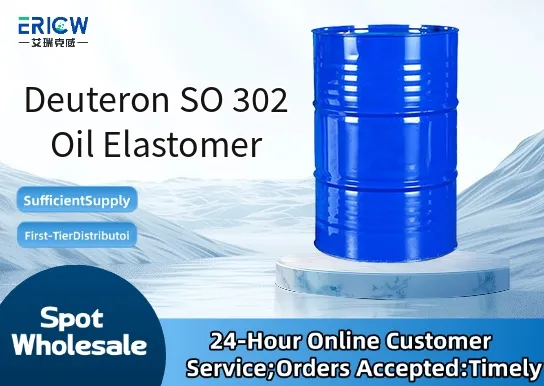
Highly compatible with saturated and unsaturated elastomers, including EPDM, NBR, and SBR.
Excellent low-temperature flexibility without compromising tensile strength or elongation.
Low volatility and high thermal stability for extended service life in dynamic applications.
Non-staining and non-migrating formulation suitable for light-colored and critical surface applications.
Optimized viscosity profile (100°C kinematic viscosity: ~30–35 cSt) for uniform dispersion in rubber compounds.
Automotive weatherstrips and door seals requiring consistent compression set resistance.
Industrial hoses and conveyor belts exposed to variable temperature and mechanical stress.
Construction-grade expansion joints and bridge bearing pads.
Wire and cable jacketing compounds demanding long-term aging stability.
Footwear soles and molded rubber components requiring balanced processability and resilience.
| Chemical Type | Saturated hydrocarbon white oil (naphthenic-paraffinic blend) |
| Product Form | Liquid at room temperature |
| Appearance | Clear, water-white, odorless liquid |
| Flash Point (COC) | ≥ 240 °C |
| Kinematic Viscosity @ 100°C | 32.5 cSt |
| ASTM D445 Compliant | Yes |
| Color (ASTM D1500) | ≤ 0.5 |
| Volatility (Loss @ 168 h / 125°C) | ≤ 1.2 wt% |
Q1: What is the primary function of Deuteron SO 302 Oil Elastomer in polymer formulations?
A: Deuteron SO 302 Oil Elastomer functions as a reactive processing aid and elastomeric modifier, enhancing melt elasticity, improving extrusion stability, and promoting better dispersion of fillers and additives in thermoplastic elastomers and compounded polyolefin systems.
Q2: Is Deuteron SO 302 compatible with common thermoplastic matrices such as PP, PE, and TPEs?
A: Yes — Deuteron SO 302 demonstrates good compatibility with polypropylene (PP), polyethylene (PE), and many thermoplastic elastomer (TPE) systems, including SEBS- and TPO-based formulations. Compatibility should be verified experimentally for specific grades and processing conditions.
Q3: How does Deuteron SO 302 differ from conventional plasticizers or mineral oil extenders?
A: Unlike non-reactive plasticizers or mineral oils, Deuteron SO 302 contains functionalized olefinic groups that enable covalent integration into the polymer matrix during processing, reducing volatility, migration, and bloom while delivering long-term performance retention.
Q4: What are typical processing recommendations for incorporating Deuteron SO 302?
A: It is generally introduced during the compounding stage — either pre-blended with base resin or dosed directly into the extruder feed throat or side feeder. Optimal incorporation occurs under moderate shear and temperatures between 160 °C and 220 °C, depending on the host polymer’s thermal profile.
Q5: Can Deuteron SO 302 support regulatory-compliant applications such as food-contact or medical-grade compounds?
A: While Deuteron SO 302 is designed for high-purity industrial use, final regulatory compliance depends on the full formulation, processing history, and end-use requirements. Customers must conduct full regulatory evaluation and testing to confirm suitability for food-contact, medical, or other regulated applications.
Contact With Us:
E-mail: wangxingqiang@ericwchem.com
Have a Questions? Call Us:
Add:
Building A1, Jiete Industrial Park, Huangpu District, Guangzhou City, Guangdong Province, China