English
 Español
 tiếng việt
 русский
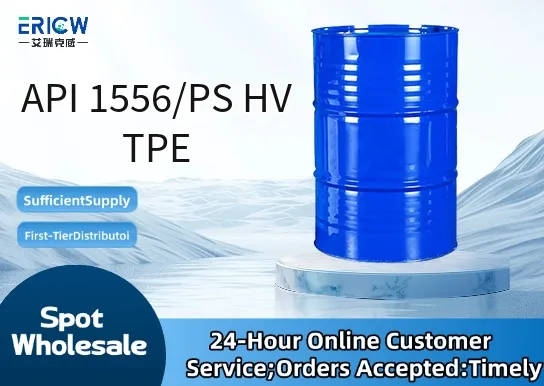
High-voltage dielectric stability for reliable electrical insulation performance.
Excellent thermal resistance up to 125°C continuous service temperature.
Good processability via injection molding and extrusion without pre-drying.
Low compression set and superior resilience for dynamic sealing applications.
Halogen-free formulation meeting RoHS and UL94 HB flame-retardant requirements.
High-voltage cable jacketing and insulation for EV charging systems.
Seals and gaskets in automotive powertrain and battery enclosures.
Flexible connectors and overmolded components in industrial control units.
Insulated housings for renewable energy inverters and DC bus components.
Medical device cables requiring biocompatibility-compliant elastomeric insulation.
| Chemical Type | Styrenic Block Copolymer (TPE-S) with PS-based hard phase |
| Product Form | Pellets |
| Appearance | Off-white to light beige, free-flowing granules |
| Primary Applications | Electrical insulation, dynamic sealing, high-voltage component overmolding |
| Key Features | High dielectric strength, low moisture absorption, excellent UV resistance |
| Benefits | Reduced part weight vs. thermosets, recyclable processing scrap, no vulcanization required |
| Density (ASTM D792) | 0.98–1.02 g/cm³ |
| Hardness (Shore A, ASTM D2240) | 85–90 |
Q1: What is the primary function of API 1556/PS HV TPE in thermoplastic elastomer formulations?
A: API 1556/PS HV TPE is a high-viscosity, styrenic block copolymer-based thermoplastic elastomer designed to enhance melt strength, elasticity, and dimensional stability in soft-touch TPE compounds—particularly where improved processing robustness and surface integrity are required.
Q2: Is API 1556/PS HV TPE compatible with common TPE base polymers such as SEBS, SBS, or TPU?
A: Yes, it demonstrates good compatibility with major styrenic thermoplastic elastomers (e.g., SEBS and SBS) and can be blended with certain polyolefin-based TPEs. Compatibility with polar systems like TPU may require evaluation via melt blending trials and rheological testing to ensure phase homogeneity.
Q3: How does API 1556/PS HV TPE influence processing behavior during extrusion or injection molding?
A: Its elevated molecular weight and narrow polydispersity contribute to higher melt viscosity and improved melt elasticity, which helps reduce die swell, improve strand stability in extrusion, and support better part definition and edge retention in thin-wall injection molding—especially for overmolded or multi-material applications.
Q4: Can API 1556/PS HV TPE be used in applications requiring regulatory compliance for food contact or medical devices?
A: While the base polymer chemistry is inherently suitable for compounding into regulated-grade formulations, final compliance depends on the full formulation—including additives, stabilizers, and processing conditions. Customers must conduct full regulatory validation appropriate to their target market and application class.
Contact With Us:
E-mail: wangxingqiang@ericwchem.com
Have a Questions? Call Us:
Add:
Building A1, Jiete Industrial Park, Huangpu District, Guangzhou City, Guangdong Province, China