English
 Español
 tiếng việt
 русский
Outstanding long-term heat resistance for enhanced durability in high-temperature processing environments.
Excellent melt flow stability, enabling consistent extrusion and injection molding performance.
Superior compatibility with polyolefin matrices, facilitating uniform dispersion and improved mechanical properties.
Low dielectric constant and dissipation factor, supporting reliable electrical insulation in wire & cable applications.
Halogen-free formulation meeting stringent environmental and regulatory requirements (e.g., RoHS, REACH).
Insulation layer for automotive and industrial low-voltage wires and cables.
Sealing and encapsulation compounds for photovoltaic module backsheets and junction boxes.
Toughening modifier for PP and PE-based automotive interior components.
Flexible, weather-resistant sheathing for outdoor telecom and power distribution cables.
Soft-touch overmolding material for consumer electronics housings and grips.
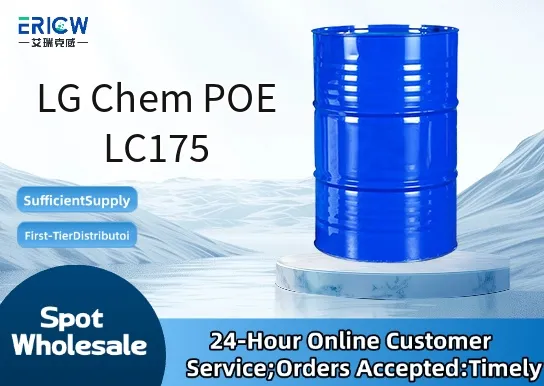
| Chemical Type | Polyolefin Elastomer (POE), ethylene-octene copolymer |
| Product Form | Pellets |
| Appearance | Off-white to light beige free-flowing pellets |
| Melt Flow Rate (190°C/2.16 kg) | 0.5–1.0 g/10 min |
| Density (ASTM D792) | 0.865–0.875 g/cm³ |
| Hardness (Shore A, ASTM D2240) | 70–75 |
| Key Features | Thermoplastic elastomer with excellent flexibility, resilience, and processability |
| Primary Applications | Wire & cable insulation, polymer modification, soft-touch overmolding |
Q1: What is the primary function of LG Chem POE LC175 in polymer formulations?
A: LG Chem POE LC175 is a polyolefin elastomer designed to enhance impact resistance, flexibility, and melt processability—particularly in polypropylene (PP) and polyethylene (PE)-based systems. It functions as a reactive or non-reactive compatibilizer and toughening agent, improving low-temperature performance without significantly compromising stiffness.
Q2: Is LG Chem POE LC175 suitable for food-contact applications?
A: LG Chem POE LC175 is not pre-certified for food-contact use under major regulatory frameworks. Customers intending to use it in food-contact applications must conduct full regulatory evaluation—including migration testing and compliance verification—based on their specific formulation, processing conditions, and target market requirements.
Q3: How does LG Chem POE LC175 compare to conventional EPDM or EPR impact modifiers?
A: Unlike traditional EPDM or EPR modifiers, POE LC175 offers superior dispersion in polyolefin matrices due to its ethylene-octene copolymer structure and narrow molecular weight distribution. It typically delivers more consistent toughness enhancement, better clarity in translucent applications, and improved long-term thermal stability during processing.
Q4: What are the recommended processing conditions for LG Chem POE LC175?
A: POE LC175 processes well using standard polyolefin equipment—such as twin-screw extruders and injection molding machines. Typical melt temperatures range from 180 °C to 230 °C. Drying is generally not required, but storage in dry conditions is advised to minimize moisture absorption prior to processing.
Contact With Us:
E-mail: wangxingqiang@ericwchem.com
Have a Questions? Call Us:
Add:
Building A1, Jiete Industrial Park, Huangpu District, Guangzhou City, Guangdong Province, China