English
 Español
 tiếng việt
 русский
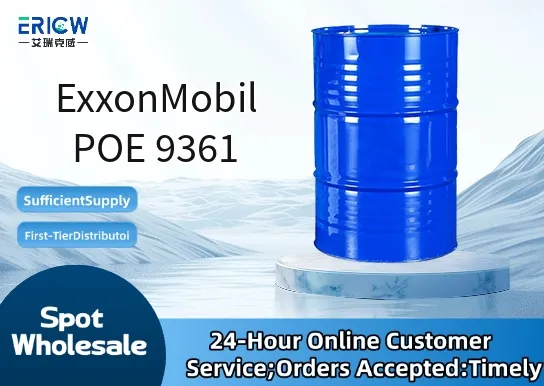
Highly stable polyolester (POE) base fluid engineered for demanding refrigeration compressor lubrication.
Excellent miscibility with HFC, HFO, and next-generation low-GWP refrigerants including R-1234yf and R-1234ze.
Superior thermal and oxidative stability under high-temperature operating conditions.
Low volatility and minimal sludge formation, supporting extended oil life and system reliability.
Effective rust and corrosion inhibition for ferrous and non-ferrous metals in sealed refrigeration systems.
Hermetic and semi-hermetic compressors in commercial refrigeration units.
Lubrication of scroll, screw, and reciprocating compressors using HFC-134a, R-404A, and R-407C.
Low-temperature cascade refrigeration systems requiring high chemical stability.
OEM-approved service lubricant for refrigeration equipment manufacturers specifying POE-based fluids.
Chillers and heat pumps operating with zeotropic and near-azeotropic refrigerant blends.
| Chemical Type | Polyolester (POE) synthetic lubricant |
| Product Form | Clear, amber liquid |
| Appearance | Homogeneous, transparent, free from sediment |
| Primary Applications | Refrigeration compressor lubrication (HFC/HFO/zeotropic systems) |
| Key Features | High thermal stability, refrigerant miscibility, hydrolytic resistance |
| Benefits | Extended drain intervals, reduced wear, minimized acid formation |
| Typical Viscosity @ 40°C | ~360 cSt (ASTM D445) |
| Typical Viscosity @ 100°C | ~42 cSt (ASTM D445) |
Q1: What is ExxonMobil POE 9361 primarily used for?
A: ExxonMobil POE 9361 is a polyolester (POE) synthetic lubricant base fluid designed for use in refrigeration compressors, particularly those operating with HFC, HFO, and natural refrigerants such as R-134a, R-410A, R-32, and R-744 (CO₂). It provides excellent miscibility with these refrigerants and thermal/oxidative stability under demanding system conditions.
Q2: Is POE 9361 compatible with common elastomers and seal materials used in refrigeration systems?
A: Yes, POE 9361 demonstrates good compatibility with typical refrigeration system elastomers including nitrile rubber (NBR), hydrogenated nitrile rubber (HNBR), and ethylene propylene diene monomer (EPDM). Compatibility testing under actual operating conditions is recommended to confirm performance with specific seal formulations and system designs.
Q3: How does POE 9361 compare to other POE lubricants in terms of hydrolytic stability?
A: POE 9361 is formulated to deliver enhanced hydrolytic stability relative to many conventional POEs, helping to minimize acid formation and sludge generation in the presence of trace moisture. This contributes to longer lubricant life and improved system reliability—especially in systems where moisture control is challenging.
Q4: Can POE 9361 be mixed with mineral oil or alkylbenzene lubricants?
A: Mixing POE 9361 with mineral oil (MO) or alkylbenzene (AB) lubricants is not recommended. Incomplete miscibility may occur, potentially leading to phase separation, reduced lubricity, and compromised compressor protection. For optimal performance, full system retrofits or thorough flushing are advised when transitioning to POE 9361.
Contact With Us:
E-mail: wangxingqiang@ericwchem.com
Have a Questions? Call Us:
Add:
Building A1, Jiete Industrial Park, Huangpu District, Guangzhou City, Guangdong Province, China