English
 Español
 tiếng việt
 русский
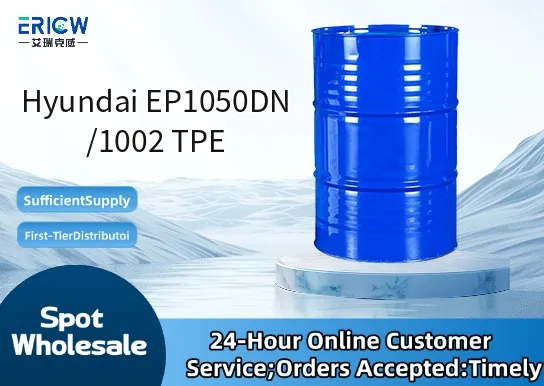
Excellent elasticity and recovery performance at ambient and low temperatures.
Good processability on standard thermoplastic equipment, including injection molding and extrusion.
Enhanced resistance to UV exposure and thermal aging compared to conventional SEBS-based TPEs.
Low extractables and compliant with ISO 10993-5 for cytotoxicity screening (non-medical grade).
Soft-touch feel with邵氏 A hardness of 50–55, ideal for ergonomic overmolding applications.
Automotive interior trim components, including door panel armrests and center console covers.
Consumer electronics housings and soft-grip overmolds for power tools and household appliances.
Industrial grips and handles requiring vibration damping and slip resistance.
Sealing profiles and gasketing solutions for non-pressurized enclosures.
Reusable packaging components requiring flexibility, durability, and recyclability.
| Chemical Type | Styrenic Thermoplastic Elastomer (SEBS-based) |
| Product Form | Pellets |
| Appearance | Off-white, free-flowing granules |
| Shore A Hardness (ASTM D2240) | 52 ± 3 |
| Melt Flow Rate (230°C/2.16 kg, ASTM D1238) | 12–16 g/10 min |
| Density (ASTM D792) | 0.90–0.92 g/cm³ |
| Continuous Use Temperature Range | −40°C to +70°C |
| RoHS Compliance | Yes (EU Directive 2011/65/EU) |
Q1: What is the primary application domain for Hyundai EP1050DN/1002 TPE?
A: Hyundai EP1050DN/1002 TPE is engineered for demanding soft-touch overmolding and co-injection applications—particularly in automotive interior components such as control knobs, gear shift boots, and dashboard trim where excellent adhesion to polypropylene (PP) and ABS substrates is required.
Q2: Is this TPE compatible with standard injection molding equipment?
A: Yes, EP1050DN/1002 is designed for processing on conventional thermoplastic injection molding machines. It exhibits good melt stability and low thermal sensitivity, enabling reliable production without requiring specialized hardware or major process modifications.
Q3: How does EP1050DN/1002 achieve strong bonding to rigid thermoplastics?
A: The grade incorporates a tailored block copolymer architecture with selective compatibility segments that promote interfacial entanglement and physical adhesion—especially with polyolefins and engineering resins—without requiring primers or surface treatments under optimized molding conditions.
Q4: What are the recommended drying conditions prior to processing?
A: To ensure optimal mechanical performance and surface quality, it is recommended to dry EP1050DN/1002 at 70–80 °C for 2–4 hours using desiccant-assisted air circulation. Moisture content should be maintained below 0.05% before molding.
Q5: Can EP1050DN/1002 be used in applications requiring UV resistance or outdoor exposure?
A: While the base formulation offers moderate inherent UV stability, long-term outdoor performance typically requires supplemental stabilization—such as HALS-based additives or protective topcoats—depending on end-use environmental severity and service life expectations.
Contact With Us:
E-mail: wangxingqiang@ericwchem.com
Have a Questions? Call Us:
Add:
Building A1, Jiete Industrial Park, Huangpu District, Guangzhou City, Guangdong Province, China