English
 Español
 tiếng việt
 русский
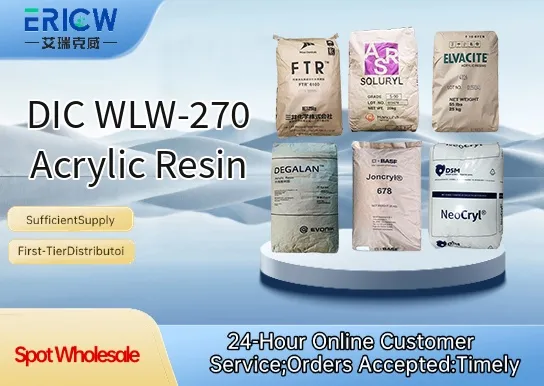
Waterborne acrylic dispersion offering excellent film clarity and gloss retention.
Low VOC formulation compliant with stringent environmental regulations including EPA and EU REACH.
Superior adhesion to diverse substrates including metals, plastics, and primed wood.
Good freeze-thaw stability (3 cycles at −5 °C to 25 °C) without viscosity breakdown or coagulation.
Fast ambient drying with balanced open time for efficient production line integration.
Architectural interior and exterior waterborne topcoats.
Industrial maintenance coatings for metal equipment and infrastructure.
Plastic coating systems requiring flexibility and substrate compatibility.
Wood finishing formulations for furniture and cabinetry.
Basecoat components in low-VOC automotive refinish systems.
| Chemical Type | Waterborne acrylic copolymer dispersion |
| Product Form | Liquid, ready-to-use dispersion |
| Appearance | Opaque white to slightly bluish milky liquid |
| pH (25 °C) | 8.0 – 9.0 |
| Solids Content (wt%) | 42.0 ± 1.0 |
| Viscosity (mPa·s, Brookfield RVT, #2 spindle, 20 rpm, 25 °C) | 150 – 400 |
| Particle Size (D50, nm) | 120 – 180 |
| Minimum Film Formation Temperature (MFFT, °C) | 22 – 26 |
Q1: What is the primary function of DIC WLW-270 in coating formulations?
A: DIC WLW-270 is a waterborne acrylic resin designed primarily as a film-forming binder and rheology modifier in architectural and industrial water-based coatings. It contributes to improved scrub resistance, gloss retention, and low-temperature film formation without requiring coalescing agents.
Q2: Is DIC WLW-270 compatible with common pigment dispersions and other water-based resins?
A: Yes, WLW-270 demonstrates broad compatibility with conventional anionic and nonionic pigment dispersants, as well as with other waterborne acrylics, vinyl acetate copolymers, and styrene-acrylic hybrid systems. Compatibility should always be verified in the final formulation due to sensitivity to pH, ionic strength, and surfactant balance.
Q3: How does DIC WLW-270 perform under humid or low-temperature curing conditions?
A: WLW-270 is engineered for robust film formation at temperatures as low as 5°C and maintains good performance under high-humidity conditions. Its optimized particle morphology supports rapid water evaporation and efficient polymer coalescence, minimizing blushing or poor intercoat adhesion in challenging ambient environments.
Q4: Can DIC WLW-270 be used in low-VOC or zero-VOC formulations?
A: Yes — WLW-270 is supplied as a 100% active, solvent-free aqueous dispersion with negligible VOC content. It supports formulators in meeting stringent low-VOC regulatory requirements for interior architectural coatings and industrial maintenance applications when combined with appropriate co-binders and additives.
Contact With Us:
E-mail: wangxingqiang@ericwchem.com
Have a Questions? Call Us:
Add:
Building A1, Jiete Industrial Park, Huangpu District, Guangzhou City, Guangdong Province, China