English
 Español
 tiếng việt
 русский
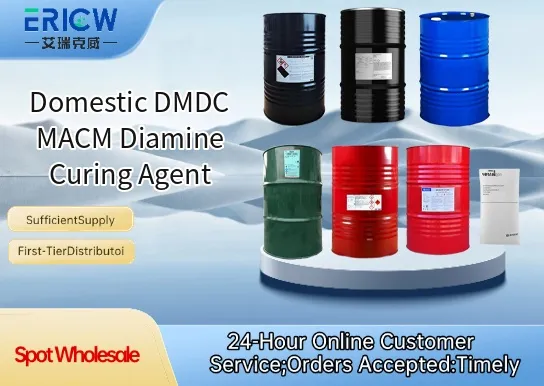
High reactivity with epoxy resins, enabling rapid cure at ambient or moderate elevated temperatures.
Excellent thermal stability and glass transition temperature (Tg) enhancement in cured systems.
Low volatility and reduced amine odor compared to conventional aliphatic diamines.
Superior chemical resistance—particularly to solvents, alkalis, and mild acids—after full cure.
Consistent batch-to-batch quality and purity, meeting stringent domestic pharmaceutical-grade manufacturing controls.
High-performance structural adhesives for aerospace composite bonding.
Electrical encapsulants and potting compounds requiring low dielectric loss and high insulation resistance.
Wind turbine blade matrix resins demanding extended pot life and reliable mechanical performance.
Coating systems for offshore oil & gas infrastructure exposed to humid, saline environments.
3D printing (SLA/DLP) build platform adhesives requiring precise debonding control and residue-free release.
| Chemical Type | Methylaminocyclohexylmethylamine (MACM) derivative; asymmetric cycloaliphatic diamine |
| Product Form | Liquid |
| Appearance | Clear, pale yellow to colorless liquid |
| Primary Applications | Epoxy resin curing agent for high-Tg composites, coatings, and adhesives |
| Key Features | Ambient-cure capability, low exotherm, hydrolytic stability |
| Benefits | Improved toughness, reduced brittleness, enhanced UV resistance vs. aromatic amines |
| Storage Condition | Under inert atmosphere (N₂), cool and dry, away from moisture and oxidizers |
| Shelf Life | 12 months unopened at 25°C or below |
Q1: What is the primary function of Domestic DMDC MACM Diamine in epoxy systems?
A: It serves as a high-performance aliphatic diamine curing agent, enabling rapid ambient- or elevated-temperature cure of epoxy resins to yield coatings and adhesives with excellent chemical resistance, flexibility, and low-temperature performance.
Q2: How does Domestic DMDC MACM differ from conventional DETA or DEEDA curing agents?
A: Unlike traditional short-chain aliphatic amines, Domestic DMDC MACM offers significantly reduced volatility and skin sensitization potential, along with improved hydrolytic stability and lower exotherm during cure—making it suitable for thicker-section applications and more stringent occupational health environments.
Q3: Is this curing agent compatible with standard bisphenol-A and bisphenol-F epoxy resins?
A: Yes, Domestic DMDC MACM demonstrates broad compatibility with common liquid and solid epoxy resins, including diglycidyl ether types. Optimal stoichiometry and pot life can be adjusted by fine-tuning the amine hydrogen equivalent ratio relative to epoxy equivalents.
Q4: What are typical handling and storage recommendations?
A: Store in tightly sealed containers under dry, cool conditions away from moisture, strong oxidizers, and direct sunlight. Due to its amine functionality, it should be handled using appropriate PPE—including nitrile gloves and eye protection—and used in well-ventilated areas.
Q5: Can Domestic DMDC MACM be used in food-contact or potable water applications?
A: While the chemistry supports low migration potential and good hydrolytic stability, formal regulatory clearance for food-contact or drinking water applications requires evaluation and approval by the relevant authority based on the final formulated system—not the curing agent alone.
Contact With Us:
E-mail: wangxingqiang@ericwchem.com
Have a Questions? Call Us:
Add:
Building A1, Jiete Industrial Park, Huangpu District, Guangzhou City, Guangdong Province, China