English
 Español
 tiếng việt
 русский
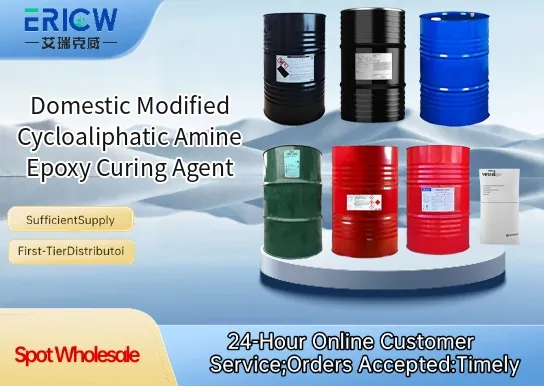
Enhanced reactivity at ambient temperature, enabling faster gelation and reduced cure time versus conventional aliphatic amines.
Improved hydrolytic stability and moisture resistance due to saturated cycloaliphatic backbone and tailored steric hindrance.
Low volatility and negligible vapor pressure, supporting safer handling and reduced VOC emissions in industrial environments.
Excellent compatibility with standard bisphenol-A and bisphenol-F epoxy resins without phase separation or haze formation.
Superior thermal and chemical resistance in cured networks, particularly against alkalis and solvents at elevated temperatures.
High-performance coatings for concrete flooring in pharmaceutical and food processing facilities.
Electrical insulation systems for dry-type transformers and encapsulated busbars.
Structural adhesives requiring rapid fixture strength and long-term durability under cyclic thermal loads.
Composite matrix resins for wind turbine blade root joints and aerospace interior components.
Repair mortars and grouts demanding low exotherm, extended working time, and high compressive strength.
| Chemical Type | Modified cycloaliphatic amine |
| Product Form | Liquid |
| Appearance | Clear to pale yellow, homogeneous liquid |
| Primary Applications | Epoxy coatings, adhesives, composites, electrical encapsulants |
| Key Features | Ambient-cure capable, low viscosity, low odor, non-crystallizing |
| Benefits | Reduced pot life variability, improved UV stability vs. aromatic amines, compliant with REACH SVHC screening |
| Density (25°C) | 0.92–0.96 g/cm³ |
| Amine Value | 380–420 mg KOH/g |
Q1: How does this modified cycloaliphatic amine differ from standard aliphatic amines in epoxy curing?
A: This domestic modified cycloaliphatic amine offers improved latency and reduced volatility compared to conventional aliphatic amines, while retaining good reactivity at ambient or moderate elevated temperatures. Its structural modification enhances compatibility with various epoxy resins and contributes to superior yellowing resistance and thermal stability in the cured network.
Q2: Is this curing agent suitable for high-gloss, UV-stable coating systems?
A: Yes — due to its cycloaliphatic backbone and tailored modification, it delivers excellent clarity, low color development, and enhanced resistance to UV-induced degradation, making it well-suited for high-performance topcoats and clear finishes where long-term gloss retention and minimal discoloration are critical.
Q3: What is the typical handling and storage guidance for this product?
A: Store in tightly sealed containers under dry, cool conditions away from moisture, strong oxidizers, and direct sunlight. As with most amine-based curing agents, prolonged exposure to air may lead to surface crystallization or CO₂ absorption; therefore, inert gas blanketing is recommended for extended storage or bulk handling.
Q4: Can this curing agent be used in solvent-free or low-VOC formulations?
A: Yes — it is commonly employed in solvent-free epoxy systems, including adhesives, potting compounds, and flooring applications. Its relatively low vapor pressure and compatibility with reactive diluents support formulation flexibility in environmentally compliant, low-VOC or zero-VOC product designs.
Contact With Us:
E-mail: wangxingqiang@ericwchem.com
Have a Questions? Call Us:
Add:
Building A1, Jiete Industrial Park, Huangpu District, Guangzhou City, Guangdong Province, China