English
 Español
 tiếng việt
 русский
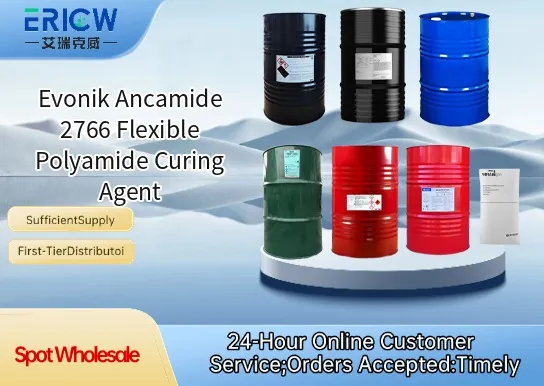
Offers excellent flexibility and impact resistance in cured epoxy systems.
Enables low-temperature curing down to 10 °C with good pot life control.
Provides superior adhesion to damp or slightly contaminated concrete and metal substrates.
Delivers low viscosity for easy handling, mixing, and improved filler incorporation.
Meets REACH compliance and contains no added solvents or hazardous air pollutants (HAPs).
Flooring systems — especially industrial and commercial epoxy mortars and self-levelers.
Concrete repair mortars requiring crack-bridging capability and thermal cycling resistance.
Protective coatings for bridges, marine structures, and wastewater infrastructure.
Adhesives and grouts for construction bonding where flexibility and moisture tolerance are critical.
High-performance composite matrices in non-structural civil engineering applications.
| Chemical Type | Aliphatic polyamide adduct |
| Product Form | Liquid |
| Appearance | Pale yellow to amber viscous liquid |
| Primary Applications | Epoxy resin curing agent for flooring, repair mortars, and protective coatings |
| Key Features | Flexible cure, low-temperature performance, moisture-tolerant adhesion |
| Benefits | Improved crack bridging, extended working time, reduced shrinkage |
| Storage Stability | 12 months at 20–25 °C in original sealed container |
| VOC Content | <10 g/L (compliant with EU Directive 2004/42/EC) |
Q1: What is the primary functional advantage of Ancamide 2766 compared to conventional polyamide curing agents?
A: Ancamide 2766 delivers enhanced flexibility and impact resistance in cured epoxy systems while maintaining good chemical resistance and adhesion—particularly beneficial for coatings and adhesives requiring durable yet deformable performance under mechanical stress.
Q2: Is Ancamide 2766 suitable for ambient-cure epoxy formulations?
A: Yes—it is specifically designed for ambient- or low-temperature cure applications, offering reliable reactivity without forced heating, though pot life and final properties may be influenced by ambient humidity and substrate temperature.
Q3: How does Ancamide 2766 influence the viscosity and handling of epoxy resin blends?
A: It typically reduces formulation viscosity compared to many solid polyamide hardeners, improving mixability and enabling easier incorporation into solvent-free or high-solids epoxy systems—supporting better flow and substrate wetting.
Q4: Can Ancamide 2766 be used in food-contact or potable water applications?
A: Ancamide 2766 is not pre-qualified for direct food-contact or potable water applications; suitability must be confirmed through full regulatory assessment by the formulator—including evaluation against applicable regional requirements and end-use conditions.
Contact With Us:
E-mail: wangxingqiang@ericwchem.com
Have a Questions? Call Us:
Add:
Building A1, Jiete Industrial Park, Huangpu District, Guangzhou City, Guangdong Province, China