English
 Español
 tiếng việt
 русский
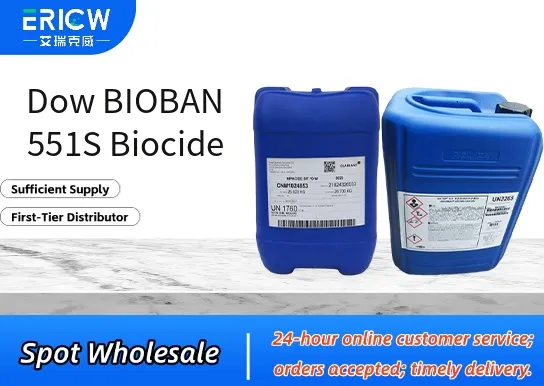
Broad-spectrum efficacy against bacteria, fungi, and algae in water-based systems.
Low-foaming formulation suitable for high-shear industrial processes.
Stable across a wide pH range (pH 4–10) and compatible with common surfactants and polymers.
Non-volatile and non-oxidizing, minimizing odor and corrosion concerns.
Designed for long-term preservative performance in closed-loop and open recirculating systems.
Preservation of water-based metalworking fluids and coolants.
Microbial control in industrial process waters, including cooling tower systems.
Protection of aqueous polymer emulsions and latexes during storage and transport.
Stabilization of pigment dispersions and architectural coatings.
Inhibition of microbial growth in oilfield production water and injection systems.
| Chemical Type | Isothiazolinone-based biocide blend |
| Product Form | Aqueous liquid |
| Appearance | Clear, pale yellow to amber liquid |
| Primary Applications | Industrial water treatment, metalworking fluids, coatings, adhesives, and emulsions |
| Key Features | Broad-spectrum, low-foaming, pH-stable, non-oxidizing |
| Recommended Use Concentration | 50–200 ppm active ingredient (system-dependent) |
| Storage Stability | ≥12 months at 5–30°C in original sealed container |
| Freezing Point | Approx. –5°C |
Q1: What is the primary mode of action of Dow BIOBAN 551S Biocide?
A: Dow BIOBAN 551S Biocide functions primarily as a broad-spectrum antimicrobial agent that disrupts microbial cell membranes and interferes with essential metabolic processes in bacteria, yeasts, and molds.
Q2: In which types of industrial formulations is Dow BIOBAN 551S Biocide commonly used?
A: It is widely incorporated into water-based industrial products such as metalworking fluids, latex paints, adhesives, construction chemicals, and cleaning concentrates—where long-term preservation against microbial spoilage is required.
Q3: Is Dow BIOBAN 551S Biocide compatible with common surfactants and thickeners used in aqueous systems?
A: Yes, it demonstrates good compatibility with a wide range of anionic, nonionic, and amphoteric surfactants, as well as typical rheology modifiers including associative thickeners and cellulose derivatives—though compatibility should always be verified under actual formulation conditions.
Q4: How should Dow BIOBAN 551S Biocide be added to a formulation for optimal performance?
A: It is recommended to add Dow BIOBAN 551S Biocide during the cool-down phase of manufacturing, after high-temperature processing steps, to preserve its efficacy. It should be well dispersed or pre-diluted in water or a compatible solvent prior to incorporation.
Q5: Does Dow BIOBAN 551S Biocide contribute to odor control in preserved formulations?
A: Yes—by effectively inhibiting microbial growth, especially sulfate-reducing bacteria and other odor-causing microorganisms, it helps maintain product freshness and reduce off-odors associated with biodegradation.
Contact With Us:
E-mail: wangxingqiang@ericwchem.com
Have a Questions? Call Us:
Add:
Building A1, Jiete Industrial Park, Huangpu District, Guangzhou City, Guangdong Province, China