English
 Español
 tiếng việt
 русский
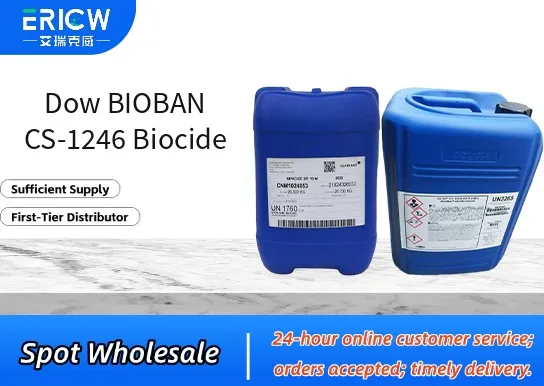
Broad-spectrum antimicrobial activity against bacteria, fungi, and algae.
Excellent stability in water-based formulations across a wide pH range (pH 4–10).
Low volatility and minimal odor, supporting safer handling and improved worker acceptance.
Compatible with common surfactants, thickeners, and polymers used in industrial formulations.
Effective at low use concentrations, contributing to cost-efficient preservation.
Preservation of water-based metalworking fluids and coolants.
Protection of architectural and industrial coatings during storage and service life.
Stabilization of adhesives, sealants, and caulks against microbial degradation.
In-can preservation of construction chemicals including grouts, mortars, and tile adhesives.
Maintenance of microbiological integrity in process water systems for non-food manufacturing.
| Chemical Type | Organic biocide based on isothiazolinone chemistry |
| Product Form | Aqueous solution |
| Appearance | Clear, pale yellow liquid |
| Active Ingredient Content | 1.24% w/w total isothiazolinones (1.0% 5-chloro-2-methyl-4-isothiazolin-3-one + 0.24% 2-methyl-4-isothiazolin-3-one) |
| Density (25°C) | Approx. 1.02 g/cm³ |
| pH (1% aqueous solution) | 2.5–4.0 |
| Solubility | Completely miscible with water |
| Primary Applications | In-can preservation of water-based industrial formulations |
Q1: What is the primary mode of action of Dow BIOBAN CS-1246 Biocide?
A: Dow BIOBAN CS-1246 Biocide functions primarily as a broad-spectrum antimicrobial agent that disrupts microbial cell membranes and interferes with essential metabolic processes in bacteria, yeasts, and fungi.
Q2: In which types of industrial formulations is CS-1246 commonly used?
A: It is widely incorporated into water-based industrial products such as metalworking fluids, latex paints, adhesives, construction chemicals, and polymer emulsions—particularly where long-term preservation against microbial spoilage is required during storage and use.
Q3: Is CS-1246 compatible with common formulation ingredients like surfactants and thickeners?
A: Yes, CS-1246 generally exhibits good compatibility with anionic, nonionic, and amphoteric surfactants, as well as common rheology modifiers and co-biocide systems—though compatibility should always be verified under actual formulation conditions and pH ranges.
Q4: How should CS-1246 be added to a formulation for optimal performance?
A: It is typically added during the cool-down phase or post-emulsification stage to avoid thermal degradation, and it is recommended to incorporate it as a pre-diluted aqueous solution to ensure uniform dispersion throughout the batch.
Q5: Does CS-1246 provide protection against both planktonic and biofilm-associated microorganisms?
A: While CS-1246 is highly effective against free-floating (planktonic) microbes, its ability to penetrate and eradicate established biofilms is limited; therefore, it is best applied as a preventive preservative rather than a biofilm remediation agent.
Contact With Us:
E-mail: wangxingqiang@ericwchem.com
Have a Questions? Call Us:
Add:
Building A1, Jiete Industrial Park, Huangpu District, Guangzhou City, Guangdong Province, China