English
 Español
 tiếng việt
 русский
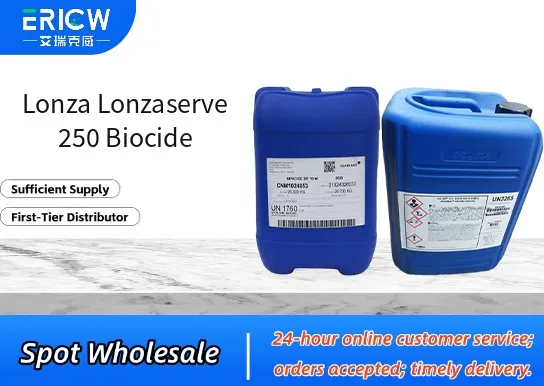
Broad-spectrum efficacy against bacteria, fungi, and algae in industrial water systems.
Stable performance across a wide pH range (pH 4–9) and varying temperature conditions.
Low foaming formulation suitable for high-flow recirculating cooling water and process water applications.
Compatible with common corrosion inhibitors and scale control agents in formulated treatment programs.
Non-oxidizing chemistry that avoids interference with oxidant-based monitoring and control systems.
Cooling water systems in power generation and HVAC installations.
Process water circuits in paper & pulp manufacturing facilities.
Recirculating water loops in chemical processing plants.
Make-up water treatment in closed-loop industrial cooling systems.
Prevention of biofilm formation in heat exchangers and condenser tubes.
| Chemical Type | Isothiazolinone-based biocide (active ingredients: 2-methylisothiazolin-3-one and 5-chloro-2-methylisothiazolin-3-one) |
| Product Form | Aqueous liquid solution |
| Appearance | Clear, pale yellow to amber liquid |
| pH (as supplied) | 2.5 – 4.5 |
| Density (20°C) | 1.08 – 1.12 g/cm³ |
| Solubility | Miscible with water in all proportions |
| Primary Applications | Non-oxidizing microbiocide for industrial water treatment |
| Storage Stability | ≥12 months at 5–30°C in original unopened container |
Q1: What is the primary mode of action of Lonzaserve 250 Biocide?
A: Lonzaserve 250 Biocide functions as a broad-spectrum preservative through the controlled release of formaldehyde, which disrupts essential cellular processes in microorganisms including bacteria, yeasts, and molds.
Q2: In which types of industrial formulations is Lonzaserve 250 typically used?
A: It is commonly incorporated into water-based industrial products such as metalworking fluids, latex paints, adhesives, construction chemicals, and cleaning concentrates where long-term microbial stability is required.
Q3: How should Lonzaserve 250 be added to a formulation for optimal performance?
A: It is recommended to add Lonzaserve 250 during the cool-down phase or at the end of the manufacturing process, after pH adjustment, to minimize premature formaldehyde release and ensure consistent preservation efficacy.
Q4: Is Lonzaserve 250 compatible with common surfactants and thickeners used in industrial formulations?
A: Yes, it demonstrates good compatibility with anionic, nonionic, and amphoteric surfactants, as well as associative and cellulosic thickeners—though compatibility testing under actual formulation conditions is advised prior to full-scale implementation.
Contact With Us:
E-mail: wangxingqiang@ericwchem.com
Have a Questions? Call Us:
Add:
Building A1, Jiete Industrial Park, Huangpu District, Guangzhou City, Guangdong Province, China