English
 Español
 tiếng việt
 русский
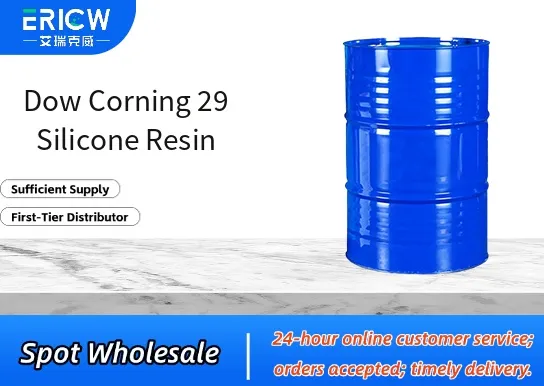
High thermal stability with continuous use up to 200 °C.
Excellent electrical insulation properties across wide temperature and frequency ranges.
Good compatibility with organic resins, solvents, and pigments for formulation flexibility.
Forms hard, glossy, durable films with outstanding weatherability and UV resistance.
Low surface energy providing inherent water repellency and release characteristics.
Heat-resistant coatings for industrial ovens and exhaust systems.
Electrical insulating varnishes for motor windings and transformers.
Weatherable topcoats for architectural metal and signage substrates.
Release agents for composite molding and silicone rubber processing.
Binders in high-performance ceramic and refractory coatings.
| Chemical Type | Methyl-phenyl silicone resin |
| Product Form | Liquid concentrate (solvent-based) |
| Appearance | Clear, colorless to pale yellow liquid |
| Solvent | Xylene and/or aromatic hydrocarbon blend |
| Non-Volatile Content | 50–55 wt% (as received) |
| Viscosity (25 °C) | 150–300 cP (Brookfield LV, Spindle #1) |
| Specific Gravity (25 °C) | 0.94–0.98 g/cm³ |
| Flash Point (Tag Closed Cup) | Approx. 40 °C |
Q1: What is the primary function of Dow Corning® 29 Silicone Resin in coating and ink formulations?
A: Dow Corning® 29 Silicone Resin is primarily used as a surface modifier to enhance slip, mar resistance, and substrate wetting. It migrates to the film surface during cure or drying, forming a low-energy layer that improves tactile feel and reduces friction without significantly affecting bulk film properties.
Q2: Is Dow Corning® 29 compatible with common organic solvent-based and high-solids resin systems?
A: Yes — it exhibits good compatibility with a broad range of thermosetting resins including acrylics, alkyds, epoxies, and polyurethanes, particularly in solvent-borne and high-solids coatings. Compatibility should be verified in the final formulation due to potential sensitivity to polarity and curing chemistry.
Q3: How is Dow Corning® 29 typically incorporated into a formulation?
A: It is generally added during the let-down stage under moderate agitation. Pre-dilution in a compatible solvent or carrier resin is recommended to ensure uniform dispersion. Dosage depends on formulation requirements but typically ranges from 0.1% to 2% by weight of the total formulation.
Q4: Does Dow Corning® 29 affect adhesion or overcoatability?
A: At typical use levels, it does not substantially impair intercoat adhesion when properly cured. However, excessive dosage or inadequate curing may lead to surface blooming, which can hinder subsequent coating or bonding steps — optimization through small-scale testing is advised.
Contact With Us:
E-mail: wangxingqiang@ericwchem.com
Have a Questions? Call Us:
Add:
Building A1, Jiete Industrial Park, Huangpu District, Guangzhou City, Guangdong Province, China