English
 Español
 tiếng việt
 русский
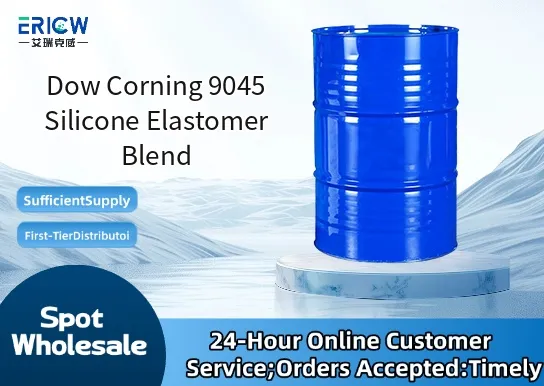
Soft, high-clarity silicone elastomer blend with excellent tear strength and elongation.
Platinum-catalyzed, addition-cure chemistry enabling low-temperature vulcanization and minimal byproduct formation.
Good thermal stability and long-term aging resistance across a wide temperature range (–60 °C to 200 °C).
Low compression set for reliable sealing performance in dynamic applications.
Biocompatibility support per ISO 10993–5 and USP Class VI testing (when fully cured under recommended conditions).
Medical device components including tubing, gaskets, and wearable sensor housings.
Consumer healthcare products such as nasal cannulas, respiratory masks, and skin-contact wearables.
Automotive interior seals and vibration-damping mounts requiring low outgassing and odor compliance.
Food-grade contact parts like dispensing valves and pump diaphragms compliant with FDA 21 CFR 177.2600.
| Chemical Type | Platinum-catalyzed addition-cure liquid silicone rubber (LSR) blend |
| Product Form | Two-part liquid system (Part A: base; Part B: catalyst) |
| Appearance | Clear, viscous liquid (Part A); translucent, low-viscosity liquid (Part B) |
| Mix Ratio (by weight) | 10:1 (A:B) |
| Cure Temperature Range | 25 °C to 180 °C (room-temperature cure possible with extended time) |
| Hardness (Shore A, cured) | 10–15 A |
| Primary Applications | Medical, food-contact, and automotive elastomeric components |
| Key Features | Ultra-soft, high-purity, low-extractables formulation |
Q1: What is the primary function of Dow Corning 9045 in polymer formulations?
A: Dow Corning 9045 is a silicone elastomer blend designed to enhance surface softness, improve slip and abrasion resistance, and reduce coefficient of friction in thermoplastic and thermoset systems—without significantly affecting mechanical strength or clarity.
Q2: Is Dow Corning 9045 compatible with common engineering resins such as polypropylene, ABS, or polycarbonate?
A: Yes, it demonstrates good compatibility with a broad range of thermoplastics including PP, ABS, PC, and PET. Compatibility and dispersion performance depend on processing conditions and formulation design, and may benefit from melt compounding at appropriate temperatures and shear rates.
Q3: How is Dow Corning 9045 typically incorporated into finished compounds?
A: It is most commonly added during melt compounding—either directly as a masterbatch or as a neat additive—and disperses readily under standard extrusion or injection molding conditions. Pre-drying is not required, though handling in low-humidity environments is recommended to maintain optimal flow characteristics.
Q4: Does Dow Corning 9045 affect the thermal stability or flammability of the host polymer?
A: Dow Corning 9045 does not inherently act as a flame retardant or thermal stabilizer. Its presence generally has minimal impact on the base polymer’s decomposition onset temperature, but formulation-level fire performance must be validated independently for each application.
Contact With Us:
E-mail: wangxingqiang@ericwchem.com
Have a Questions? Call Us:
Add:
Building A1, Jiete Industrial Park, Huangpu District, Guangzhou City, Guangdong Province, China