English
 Español
 tiếng việt
 русский
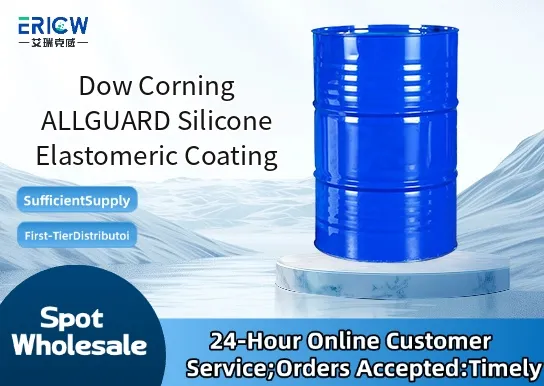
Exceptional UV and weather resistance for long-term durability on exterior surfaces.
High elasticity with >300% elongation to bridge hairline cracks and accommodate substrate movement.
Hydrophobic surface that repels water while allowing moisture vapor transmission to prevent blistering.
Excellent adhesion to properly prepared concrete, stucco, masonry, and existing acrylic coatings.
Low VOC formulation compliant with U.S. EPA and South Coast AQMD regulations.
Exterior wall coatings for commercial and residential buildings.
Weatherproofing systems for concrete tilt-up panels and precast façades.
Protective topcoats over EIFS (Exterior Insulation and Finish Systems).
Re-coating solutions for aging elastomeric acrylic facades requiring enhanced durability.
Moisture management systems in high-humidity or coastal environments.
| Chemical Type | Silicone-modified acrylic elastomer |
| Product Form | Water-based liquid coating |
| Appearance | Opaque, uniform dispersion; available in standard and custom colors |
| Primary Applications | Exterior architectural wall protection and waterproofing |
| Key Features | UV stability, crack bridging, breathability, low surface energy |
| Benefits | Extended service life, reduced maintenance, improved energy efficiency via solar reflectance |
| Application Method | Roller, brush, or airless spray |
| Compliance | Meets ASTM D6083 and ASTM C920 Type S performance standards |
Q1: What substrates is ALLGUARD Silicone Elastomeric Coating designed to protect?
A: ALLGUARD is engineered for durable protection on porous and semi-porous building substrates including concrete, stucco, masonry, fiber-cement board, and precast concrete. Its elastomeric nature accommodates thermal and structural movement without cracking or delamination.
Q2: How does ALLGUARD differ from conventional acrylic or urethane-based elastomeric coatings?
A: Unlike many acrylic or urethane systems, ALLGUARD leverages silicone chemistry to deliver superior water repellency, UV stability, and breathability while maintaining long-term elasticity. It resists chalking, fading, and surface degradation under prolonged weather exposure without sacrificing vapor transmission.
Q3: Can ALLGUARD be applied over existing coatings?
A: Yes—ALLGUARD may be applied over sound, well-adhered acrylic, silicone-modified, or cementitious coatings after proper surface preparation and compatibility testing. Adhesion assessment and a small-scale trial are recommended prior to full application.
Q4: Is priming required before applying ALLGUARD?
A: Priming is generally not required on clean, sound, uncoated masonry or concrete substrates. However, a compatible primer may be used on highly absorbent, dusty, or previously coated surfaces to ensure uniform film formation and optimal adhesion.
Contact With Us:
E-mail: wangxingqiang@ericwchem.com
Have a Questions? Call Us:
Add:
Building A1, Jiete Industrial Park, Huangpu District, Guangzhou City, Guangdong Province, China