English
 Español
 tiếng việt
 русский
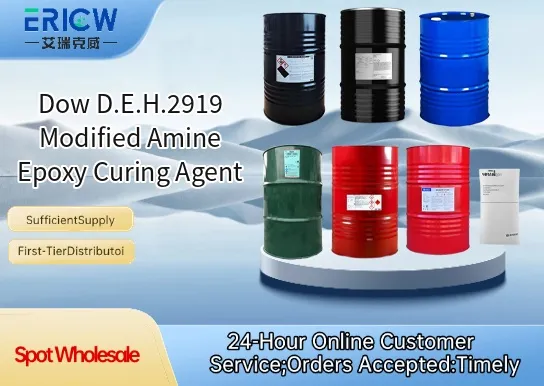
Low-viscosity liquid enabling easy handling and efficient mixing with epoxy resins
Extended pot life at ambient temperatures for improved processing window
Excellent adhesion to diverse substrates including metals, concrete, and composites
Good chemical resistance post-cure, particularly against alkalis and solvents
Reduced exotherm during cure compared to conventional aliphatic amines
High-performance industrial flooring systems
Structural adhesive formulations for aerospace and automotive assembly
Protective coatings for marine and offshore infrastructure
Electrical encapsulants and potting compounds requiring low stress and thermal stability
Repair mortars and grouts for civil engineering applications
| Chemical Type | Modified aliphatic amine |
| Product Form | Liquid |
| Appearance | Clear to pale yellow, homogeneous liquid |
| Primary Applications | Epoxy resin curing agent for coatings, adhesives, and composites |
| Key Features | Low viscosity, extended pot life, reduced exotherm, good substrate adhesion |
| Benefits | Improved processability, enhanced cured film flexibility, lower risk of thermal cracking |
| Storage Conditions | Store in original sealed container at 15–25°C; protect from moisture and direct sunlight |
| Shelf Life | 12 months from date of manufacture when stored properly |
Q1: What are the key performance advantages of D.E.H.2919 compared to conventional amine curing agents?
A: D.E.H.2919 offers improved latency and extended pot life at ambient temperatures while maintaining efficient reactivity upon heating, enabling better processing control in demanding applications such as filament winding and prepreg manufacturing. Its modified structure also contributes to reduced volatility and lower odor versus unmodified aliphatic amines.
Q2: Is D.E.H.2919 suitable for high-performance composite systems requiring elevated thermal stability?
A: Yes — when cured with standard epoxy resins, D.E.H.2919 contributes to thermoset networks with enhanced heat resistance and mechanical retention at elevated service temperatures, making it well-suited for aerospace, wind energy, and industrial tooling applications where dimensional stability under thermal cycling is critical.
Q3: How does D.E.H.2919 perform in terms of compatibility and dispersion with common liquid epoxy resins?
A: D.E.H.2919 exhibits excellent miscibility with bisphenol-A and bisphenol-F based liquid epoxy resins at room temperature, forming homogeneous blends without phase separation or gelation during storage. It generally requires minimal mixing energy and no solvent addition for uniform incorporation.
Q4: What safety and handling considerations should be observed when working with D.E.H.2919?
A: As with other amine-functional curing agents, D.E.H.2919 may cause skin and eye irritation and should be handled using appropriate personal protective equipment (PPE), including nitrile gloves, safety goggles, and adequate ventilation. Avoid prolonged or repeated skin contact, and consult the Safety Data Sheet (SDS) for detailed occupational hygiene guidance.
Contact With Us:
E-mail: wangxingqiang@ericwchem.com
Have a Questions? Call Us:
Add:
Building A1, Jiete Industrial Park, Huangpu District, Guangzhou City, Guangdong Province, China