English
 Español
 tiếng việt
 русский
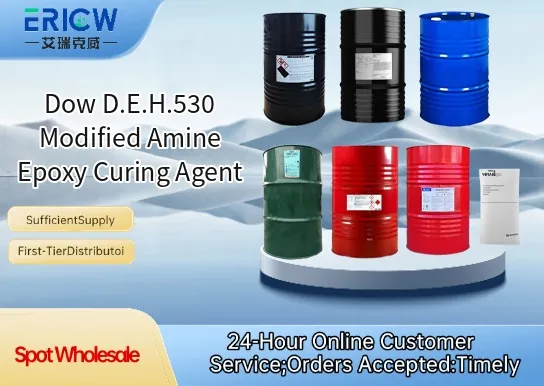
Low-viscosity liquid formulation enabling easy handling and efficient mixing with epoxy resins.
Modified amine chemistry providing improved flexibility and reduced brittleness in cured systems.
Enhanced moisture tolerance compared to conventional aliphatic amines, supporting more robust processing conditions.
Good pot life at ambient temperature (typically 4–6 hours at 25°C), balancing workability and cure speed.
Delivers excellent adhesion to metals, concrete, and composites without mandatory surface priming.
Industrial flooring and concrete repair mortars requiring rapid turnaround and chemical resistance.
Protective coatings for steel infrastructure, including bridges, pipelines, and marine assets.
Electrical encapsulation and potting compounds where thermal stability and dielectric performance are critical.
Composite bonding adhesives for wind turbine blades and transportation components.
High-performance grouts and anchoring systems in construction and civil engineering.
| Chemical Type | Modified aliphatic amine |
| Product Form | Liquid |
| Appearance | Pale yellow to amber clear liquid |
| Primary Applications | Epoxy resin curing agent for coatings, adhesives, and composites |
| Key Features | Moisture-tolerant, low viscosity, ambient-cure capable |
| Benefits | Improved toughness, extended pot life, strong substrate adhesion |
| Recommended Resin Ratio (by weight) | 100 parts epoxy resin : 12–18 parts D.E.H.530 |
| Storage Stability | 12 months in original sealed container at 15–25°C |
Q1: What is the primary functional advantage of D.E.H.530 compared to conventional amine curing agents?
A: D.E.H.530 is a modified amine designed to offer improved compatibility with epoxy resins, reduced volatility, and lower skin sensitization potential—while maintaining effective cure kinetics and good low-temperature reactivity.
Q2: Is D.E.H.530 suitable for use in coatings requiring FDA-compliant food-contact performance?
A: D.E.H.530 is not pre-approved for direct food-contact applications under FDA or equivalent global regulations. Formulators must conduct full regulatory evaluation—including extraction testing and compliance verification—within their specific end-use system and processing conditions.
Q3: How does D.E.H.530 perform in high-humidity or damp-surface environments?
A: As a modified amine, D.E.H.530 exhibits enhanced moisture tolerance relative to many unmodified aliphatic amines, supporting more reliable cure initiation on slightly damp substrates—though surface preparation remains critical for optimal adhesion and film integrity.
Q4: What types of epoxy resins is D.E.H.530 typically formulated with?
A: D.E.H.530 is commonly used with standard liquid bisphenol-A and bisphenol-F epoxy resins, as well as some solid epoxy dispersions. Compatibility and reactivity should be confirmed experimentally for specialty or highly functionalized epoxy systems.
Q5: What is the typical dosage range for D.E.H.530 in epoxy formulations?
A: Dosage depends on formulation requirements, target cure profile, and resin functionality—but D.E.H.530 is generally used at low concentrations, often ranging from 0.1% to 2% by weight relative to the epoxy resin.
Contact With Us:
E-mail: wangxingqiang@ericwchem.com
Have a Questions? Call Us:
Add:
Building A1, Jiete Industrial Park, Huangpu District, Guangzhou City, Guangdong Province, China