English
 Español
 tiếng việt
 русский
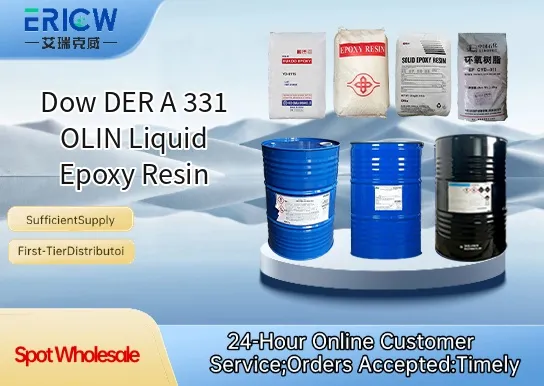
Low-viscosity liquid epoxy resin enabling excellent flow, wetting, and air release in processing.
High purity with consistent epoxide equivalent weight (EEW) for reliable reactivity and cure performance.
Excellent adhesion to metals, composites, and cured thermosets without requiring aggressive surface pretreatment.
Good chemical resistance post-cure, particularly against alkalis and polar solvents.
Compatible with standard amine, anhydride, and catalytic curing agents for flexible formulation design.
Structural adhesives for aerospace and automotive bonding applications.
Matrix resin in fiber-reinforced composites for wind turbine blades and industrial laminates.
Electrical encapsulation and potting compounds for power electronics and transformers.
High-performance coatings and linings for corrosion protection in industrial infrastructure.
| Chemical Type | Bisphenol-A based diglycidyl ether epoxy resin |
| Product Form | Clear, low-viscosity liquid |
| Appearance | Water-white to pale yellow, transparent liquid |
| Epoxide Equivalent Weight (EEW) | 185–192 g/eq |
| Viscosity at 25°C | 12,000–16,000 cP |
| Chloride Content | ≤ 750 ppm |
| Volatiles Content | ≤ 0.5 wt% |
| Primary Applications | Adhesives, composites, electrical encapsulation, protective coatings |
Q1: What is the primary chemical nature and typical functionality of Dow DER A 331?
A: Dow DER A 331 is a liquid bisphenol-A based epoxy resin with an average epoxide functionality close to two per molecule. It exhibits low viscosity and good reactivity toward common amine and anhydride curing agents, making it suitable for formulating solvent-free or low-VOC coatings, adhesives, and composites.
Q2: Is Dow DER A 331 compatible with standard epoxy hardeners used in industrial applications?
A: Yes — it is fully compatible with aliphatic and cycloaliphatic amines, aromatic amines, polyamides, and anhydrides commonly employed in structural adhesives, electrical encapsulants, and protective coatings. Formulators should conduct compatibility and cure profiling under intended processing conditions.
Q3: How does Dow DER A 331 compare to solid epoxy resins in terms of processing advantages?
A: As a low-viscosity liquid resin, it eliminates the need for high-temperature melting or aggressive solvents during mixing and processing. This enables easier handling, improved filler wetting, reduced energy consumption, and broader suitability for ambient- or low-temperature cure systems.
Q4: Can Dow DER A 331 be used in food-contact or potable water applications?
A: Dow DER A 331 is not pre-qualified for direct food-contact or potable water applications. Any such use requires full formulation evaluation, regulatory review, and compliance verification by the end-user against applicable regional regulations and intended service conditions.
Contact With Us:
E-mail: wangxingqiang@ericwchem.com
Have a Questions? Call Us:
Add:
Building A1, Jiete Industrial Park, Huangpu District, Guangzhou City, Guangdong Province, China