English
 Español
 tiếng việt
 русский
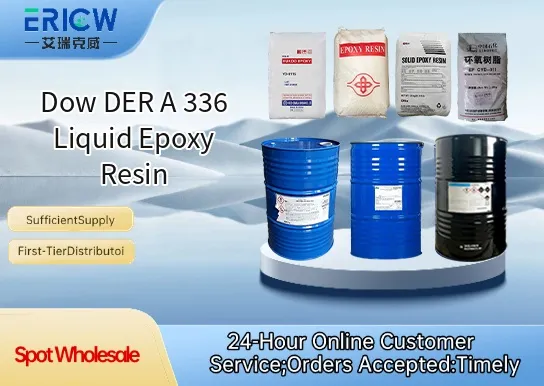
Low-viscosity liquid epoxy resin enabling excellent processability and easy handling in standard mixing and dispensing equipment.
High purity with low chloride content, supporting reliable electrical insulation performance and reduced risk of corrosion in sensitive electronics.
Consistent reactivity profile for predictable cure kinetics with common amine and anhydride hardeners.
Excellent adhesion to metals, composites, and cured polymer substrates across diverse environmental conditions.
Stable shelf life under recommended storage conditions (25 °C or below, tightly sealed container).
Electrical encapsulation and potting compounds for transformers, sensors, and power modules.
Structural adhesives for aerospace and automotive composite bonding.
High-performance coatings for corrosion protection on offshore and industrial steel structures.
Matrix resin in filament-wound pipes and pressure vessels requiring dimensional stability and chemical resistance.
Formulation base for specialty composites used in wind turbine blade root joints and lightning protection systems.
| Chemical Type | Bisphenol-A based diglycidyl ether epoxy resin |
| Product Form | Clear to pale yellow liquid |
| Appearance | Homogeneous, low-viscosity liquid at 25 °C |
| Epoxy Equivalent Weight (EEW) | 185–192 g/eq |
| Viscosity at 25 °C | 12,000–16,000 cP |
| Chloride Content | ≤ 500 ppm |
| Softening Point | Not applicable (liquid at room temperature) |
| Primary Applications | Encapsulation, structural adhesives, high-performance coatings, composite matrices |
Q1: What is the primary functional role of Dow DER A 336 in epoxy formulations?
A: Dow DER A 336 is a liquid diglycidyl ether of bisphenol-A epoxy resin designed primarily as a reactive diluent and viscosity modifier. It reduces formulation viscosity without significantly compromising crosslink density or thermal performance, enabling improved processability in casting, potting, and coating applications.
Q2: How does Dow DER A 336 compare to traditional reactive diluents like phenyl glycidyl ether (PGE) or butyl glycidyl ether (BGE)?
A: Unlike monofunctional glycidyl ethers, Dow DER A 336 retains two epoxide groups per molecule, contributing to network formation during cure. This supports higher crosslink density and better mechanical/thermal properties compared to monofunctional diluents, which act solely as non-reactive modifiers after initial reaction.
Q3: Is Dow DER A 336 suitable for high-gloss, low-viscosity coatings requiring extended pot life?
A: Yes — its low volatility and moderate reactivity allow for good pot life retention in ambient- and heat-cure coating systems. When paired with appropriate amine or anhydride hardeners, it supports excellent film formation, surface leveling, and gloss development in protective and decorative coatings.
Q4: Can Dow DER A 336 be used in electrically insulating encapsulation compounds?
A: Yes — it is commonly incorporated into encapsulants for electronic components where low ionic impurity content, stable dielectric properties, and reliable adhesion to substrates are required. Its consistent purity profile supports long-term insulation resistance under humid or elevated temperature conditions.
Contact With Us:
E-mail: wangxingqiang@ericwchem.com
Have a Questions? Call Us:
Add:
Building A1, Jiete Industrial Park, Huangpu District, Guangzhou City, Guangdong Province, China