English
 Español
 tiếng việt
 русский
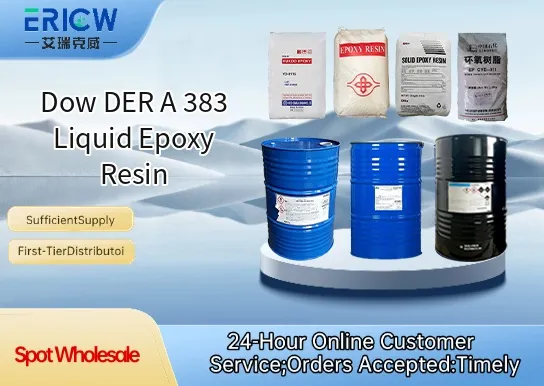
Low-viscosity liquid epoxy resin enabling excellent processability and ease of handling in ambient-temperature mixing and dispensing operations.
High purity with low chloride content, supporting superior electrical insulation properties and long-term reliability in electronic encapsulation.
Excellent compatibility with standard amine and anhydride curing agents, facilitating broad formulation flexibility for thermoset systems.
Good adhesion to metals, ceramics, and composite substrates without requiring aggressive surface pretreatment.
Consistent batch-to-batch performance ensured by Dow’s rigorous manufacturing controls and quality assurance protocols.
Encapsulation and potting of electronic components including transformers, sensors, and power modules.
Electrical insulation coatings for motor windings, busbars, and high-voltage connectors.
Structural adhesives for aerospace and automotive composites where thermal stability and bond integrity are critical.
Matrix resin in filament-wound pressure vessels and corrosion-resistant piping systems.
Formulation base for high-performance flooring and protective coatings in industrial environments.
| Chemical Type | Bisphenol-A based diglycidyl ether epoxy resin |
| Product Form | Clear to pale yellow liquid |
| Appearance | Homogeneous, low-viscosity liquid at 25°C |
| Epoxy Equivalent Weight (EEW) | 185–192 g/eq |
| Viscosity at 25°C | 12,000–16,000 cP |
| Chloride Content | ≤ 500 ppm |
| Softening Point | Not applicable (liquid at room temperature) |
| Primary Applications | Electronic encapsulation, electrical insulation, structural adhesives, composite matrices |
Q1: What is the primary chemical nature and typical molecular weight range of Dow DER A 383?
A: Dow DER A 383 is a bisphenol-A based liquid epoxy resin with an average molecular weight typically in the low to mid-range for standard liquid epoxies, resulting in low viscosity and good reactivity with common curing agents.
Q2: How does Dow DER A 383 compare to solid epoxy resins like DER 662 or DER 667 in terms of processing and formulation flexibility?
A: As a liquid resin, Dow DER A 383 offers inherent advantages in handling—no melting step is required, enabling simpler mixing, improved homogeneity with fillers and modifiers, and suitability for ambient- or low-temperature processing applications where thermal stability of the resin itself is not limiting.
Q3: Which types of curing agents are most commonly used with Dow DER A 383 in industrial coatings and electrical encapsulation formulations?
A: It is widely compatible with amine-based hardeners (aliphatic, cycloaliphatic, and aromatic), anhydrides, and catalytic systems such as tertiary amines or Lewis acids—selection depends on desired cure profile, final properties, and end-use requirements including thermal resistance and dielectric performance.
Q4: Is Dow DER A 383 suitable for applications requiring FDA compliance or food-contact safety?
A: Dow DER A 383 is not pre-approved for direct food-contact applications; its use in such contexts requires full evaluation and validation by the formulator—including assessment of finished system composition, intended conditions of use, and applicable regulatory frameworks—prior to commercial deployment.
Contact With Us:
E-mail: wangxingqiang@ericwchem.com
Have a Questions? Call Us:
Add:
Building A1, Jiete Industrial Park, Huangpu District, Guangzhou City, Guangdong Province, China