English
 Español
 tiếng việt
 русский
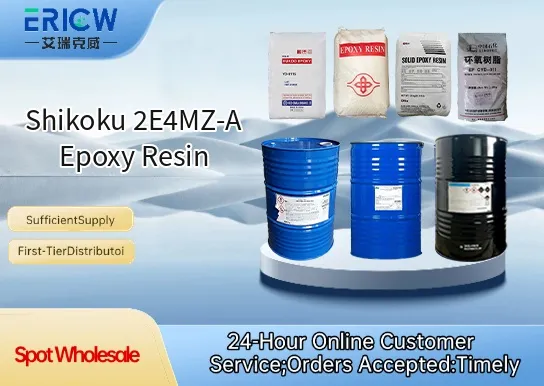
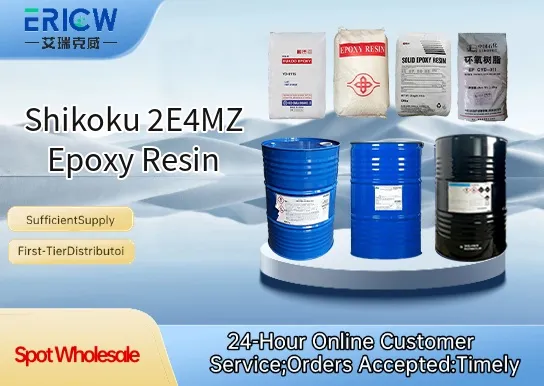
Highly reactive latent imidazole accelerator—enables precise control over cure onset and pot life.
Excellent thermal stability in uncured state, supporting long-term storage and high-temperature processing windows.
Enables low-temperature curing (120–150 °C) without compromising final crosslink density or glass transition temperature.
Delivers superior electrical insulation properties and low ionic impurity content for electronic-grade reliability.
Compatible with standard bisphenol-A and novolac epoxy resins, facilitating seamless formulation integration.
Encapsulants and glob-tops for semiconductor devices and IC packages.
Prepregs and laminates in high-performance printed circuit boards (PCBs).
Underfill materials for flip-chip and wafer-level packaging.
Adhesives for microelectronics assembly requiring fine-pitch bonding and low stress.
Structural composites in aerospace and automotive electronics housings.
| Chemical Type | Latent imidazole accelerator (2-ethyl-4-methylimidazole derivative) |
| Product Form | Pale yellow to light amber crystalline solid |
| Appearance | Free-flowing granules or fine powder |
| Primary Applications | Thermally activated epoxy curing agent for electronics encapsulation and laminates |
| Key Features | Latent reactivity, low volatility, halogen-free formulation |
| Benefits | Extended shelf life (>12 months at 25 °C), minimal bloom, high Tg after cure |
| Recommended Storage | Sealed container, dry conditions, 5–25 °C |
| Handling Precaution | Use in well-ventilated area; avoid inhalation of dust and skin contact |
Q1: What is the primary function of Shikoku 2E4MZ-A in epoxy formulations?
A: Shikoku 2E4MZ-A is a latent imidazole-type curing agent designed to provide controlled reactivity and extended pot life at ambient temperatures, while enabling rapid and efficient crosslinking upon thermal activation—commonly used to enhance cure profile flexibility in heat-curable epoxy systems.
Q2: Is Shikoku 2E4MZ-A suitable for electronic encapsulation or underfill applications?
A: Yes—it is widely selected for high-reliability electronic applications due to its low volatility, excellent thermal stability post-cure, and ability to deliver low-stress, highly filled epoxy networks with good adhesion to common substrates such as copper, silicon, and molded compounds.
Q3: How does Shikoku 2E4MZ-A compare to traditional DICY-based curing agents?
A: Unlike dicyandiamide (DICY), 2E4MZ-A offers significantly improved solubility in standard epoxy resins, more consistent dispersion in masterbatches, and a sharper, more predictable thermal activation onset—leading to tighter process control and reduced risk of premature gelation during storage or handling.
Q4: What is the typical dosage range for Shikoku 2E4MZ-A in standard bisphenol-A epoxy systems?
A: Dosage is formulation-dependent, but it is typically used at low concentrations—generally ranging from 0.1% to 2% by weight relative to the epoxy resin—and may be adjusted based on desired gel time, glass transition temperature, and final mechanical performance requirements.
Contact With Us:
E-mail: wangxingqiang@ericwchem.com
Have a Questions? Call Us:
Add:
Building A1, Jiete Industrial Park, Huangpu District, Guangzhou City, Guangdong Province, China