English
 Español
 tiếng việt
 русский
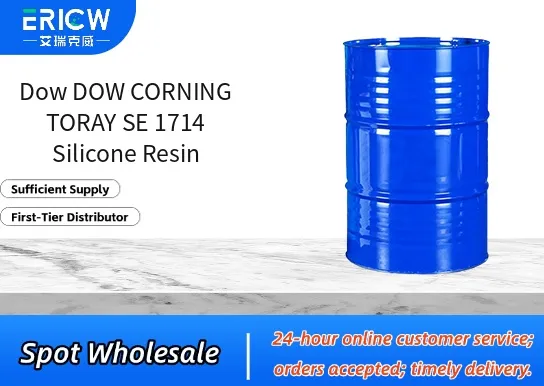
High thermal stability with continuous service capability up to 200 °C.
Excellent electrical insulation properties across wide temperature and frequency ranges.
Good adhesion to metals, ceramics, and cured silicone elastomers without primer.
Solvent-based formulation enabling easy application via spraying, dipping, or brushing.
Crosslinks at elevated temperatures to form durable, flexible, and hydrophobic silicone networks.
Electrical encapsulation and potting of transformers, inductors, and power modules.
Insulating coatings for motor windings and coil assemblies in industrial and automotive systems.
Protective conformal coatings for printed circuit boards (PCBs) exposed to harsh environments.
Matrix resin for high-temperature composite laminates and ceramic-bonding applications.
Surface treatment for improving dielectric strength and moisture resistance of electronic components.
| Chemical Type | Phenyl-methyl silicone resin |
| Product Form | Liquid solution (toluene/xylene solvent system) |
| Appearance | Clear, colorless to pale yellow liquid |
| Non-Volatile Content (wt%) | 50 ± 2% |
| Viscosity (25 °C, mPa·s) | 80–120 |
| Density (25 °C, g/cm³) | 0.89–0.91 |
| Flash Point (°C, closed cup) | 35–40 |
| Key Features | Thermally curable, low ionic impurities, UL 94 V-0 rated when fully cured |
Q1: What is the primary function of SE 1714 in coating and ink formulations?
A: SE 1714 functions primarily as a surface modifier and release enhancer, improving substrate wetting, leveling, and slip while reducing surface tension without significantly affecting film integrity or adhesion.
Q2: Is SE 1714 compatible with water-based systems?
A: Yes, SE 1714 is formulated for compatibility with both solvent-based and water-based systems, including acrylic, polyurethane, and epoxy dispersions, though optimal incorporation typically requires pre-dilution or high-shear mixing to ensure uniform dispersion.
Q3: How does SE 1714 differ from standard silicone oils or emulsions?
A: Unlike linear silicone oils, SE 1714 is a reactive silicone resin with controlled branching and functional groups, offering enhanced thermal stability, improved film-forming capability, and greater resistance to migration or blooming in cured films.
Q4: Can SE 1714 be used in heat-cured industrial coatings?
A: Yes, SE 1714 demonstrates good thermal stability and retains its functionality under typical industrial baking conditions (e.g., up to 180°C for short durations), making it suitable for coil coatings, appliance finishes, and other thermoset applications.
Contact With Us:
E-mail: wangxingqiang@ericwchem.com
Have a Questions? Call Us:
Add:
Building A1, Jiete Industrial Park, Huangpu District, Guangzhou City, Guangdong Province, China