English
 Español
 tiếng việt
 русский
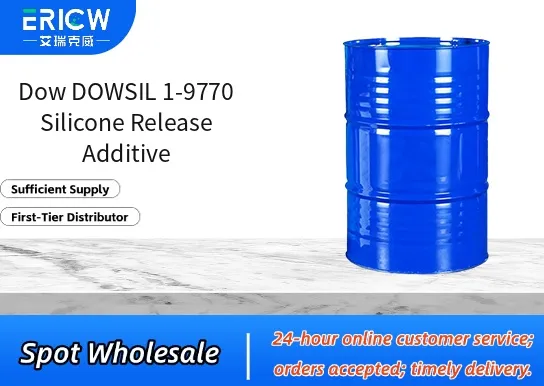
High-performance silicone-based additive designed to deliver consistent, controllable release in demanding coating and ink systems.
Excellent compatibility with a broad range of waterborne and solventborne acrylics, polyurethanes, and vinyl dispersions.
Enables low migration and minimal surface interference—ideal for applications requiring clean substrate adhesion post-release.
Stable under typical formulation and curing conditions, including ambient drying and moderate thermal cure profiles (up to 120 °C).
Reduces need for post-application silicone wipe-down or rework, supporting improved production efficiency and yield.
Pressure-sensitive adhesive (PSA) release liners for labels, tapes, and medical devices.
Release coatings for flexible packaging substrates, including PET, PE, and paperboard.
Functional coatings in graphic arts and digital printing media requiring temporary or semi-permanent release.
Industrial release layers in composite molding and transfer film applications.
| Chemical Type | Modified polydimethylsiloxane (PDMS) copolymer |
| Product Form | Liquid concentrate |
| Appearance | Clear to slightly hazy, colorless to pale yellow liquid |
| Primary Applications | Waterborne and solventborne release coatings, PSA liner systems |
| Key Features | Low volatility, non-yellowing, shear-stable dispersion |
| Benefits | Controlled surface segregation, reduced silicone bleed, improved coating uniformity |
| Recommended Use Level | 0.2–1.5 wt% (based on total formulation solids) |
| Storage Conditions | Store in original unopened container at 5–30 °C; protect from freezing and prolonged UV exposure |
Q1: What is the primary function of DOWSIL 1-9770 in coating and ink formulations?
A: DOWSIL 1-9770 is a silicone-based additive designed to provide controlled release properties and surface modification in solvent-borne, water-borne, and high-solids coatings and inks. It enhances slip, improves substrate release behavior, and reduces surface defects such as orange peel or cratering.
Q2: Is DOWSIL 1-9770 compatible with common resin systems used in industrial coatings?
A: Yes, DOWSIL 1-9770 demonstrates broad compatibility with acrylics, polyurethanes, epoxies, alkyds, and polyester resins. Compatibility should be verified in the final formulation due to potential interactions with catalysts, surfactants, or other additives.
Q3: How is DOWSIL 1-9770 typically incorporated into a formulation?
A: It is generally added during the let-down or post-addition stage under moderate agitation. Pre-dilution in a compatible solvent or carrier may improve dispersion. Avoid high-shear mixing that could degrade silicone performance.
Q4: Does DOWSIL 1-9770 affect the curing mechanism or film hardness of thermosetting systems?
A: When used at recommended dosage levels, it typically does not interfere with crosslinking reactions. However, excessive addition may impact surface cure or hardness development—formulators are advised to conduct small-scale cure testing under actual processing conditions.
Q5: Can DOWSIL 1-9770 be used in food-contact compliant coatings?
A: DOWSIL 1-9770 is not pre-approved for direct food-contact applications. Its suitability depends on full regulatory evaluation of the finished formulation, including migration assessment and compliance with applicable regional regulations.
Contact With Us:
E-mail: wangxingqiang@ericwchem.com
Have a Questions? Call Us:
Add:
Building A1, Jiete Industrial Park, Huangpu District, Guangzhou City, Guangdong Province, China