English
 Español
 tiếng việt
 русский
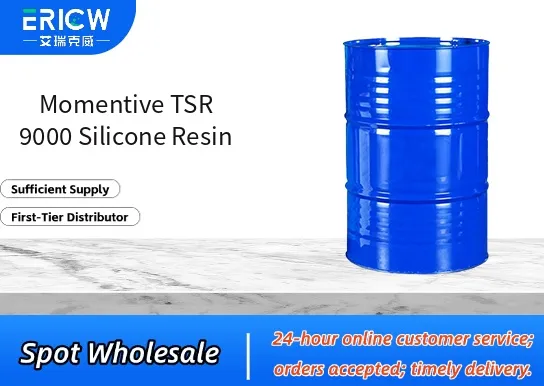
High thermal stability with continuous service up to 200 °C.
Excellent electrical insulation properties across wide temperature and frequency ranges.
Good compatibility with organic resins, enabling hybrid formulation flexibility.
Low volatility and minimal outgassing, suitable for high-reliability electronic encapsulation.
Self-crosslinking capability under heat, eliminating need for external catalysts.
Encapsulants and potting compounds for power electronics and LED modules.
High-temperature insulating varnishes for motor windings and transformers.
Binders in ceramic and abrasive coatings requiring thermal resilience.
Matrix resin in silicone-modified composites for aerospace and automotive components.
Protective conformal coatings for printed circuit boards operating in harsh environments.
| Chemical Type | Phenyl-methyl silicone resin |
| Product Form | Clear to light yellow viscous liquid |
| Appearance | Homogeneous, slightly viscous liquid |
| Primary Applications | Electrical insulation, high-temperature coatings, hybrid composites |
| Key Features | Thermally stable, electrically insulating, self-crosslinking |
| Benefits | Enhanced reliability, reduced formulation complexity, extended service life |
| Storage Conditions | Store at 5–30 °C in sealed containers; protect from moisture |
| VOC Content | Low (compliant with major industrial emission standards) |
Q1: What is the primary function of TSR 9000 in coating and ink formulations?
A: TSR 9000 functions primarily as a surface modifier and release enhancer, improving substrate wetting, leveling, and slip while reducing surface tension without significantly affecting cure kinetics or film integrity.
Q2: Is TSR 9000 compatible with both solvent-based and waterborne systems?
A: Yes — TSR 9000 exhibits broad compatibility across solvent-borne, high-solids, and waterborne resin systems, including acrylics, polyurethanes, and alkyds, though optimal dispersion may require mild agitation or pre-dilution depending on formulation polarity.
Q3: How should TSR 9000 be incorporated into a formulation to avoid surface defects?
A: It is recommended to add TSR 9000 during the let-down stage under moderate shear, after primary resins and pigments are fully dispersed. Premature addition or excessive dosage may lead to dewetting or craters; typical use levels range from 0.1% to 2% by weight of total formulation.
Q4: Does TSR 9000 contribute to thermal or UV stability in finished films?
A: As a silicone resin, TSR 9000 imparts inherent resistance to thermal oxidation and enhances the overall robustness of coatings exposed to elevated temperatures or UV radiation, though it is not intended as a primary UV stabilizer and should be used in conjunction with dedicated HALS or UV absorbers for demanding outdoor applications.
Contact With Us:
E-mail: wangxingqiang@ericwchem.com
Have a Questions? Call Us:
Add:
Building A1, Jiete Industrial Park, Huangpu District, Guangzhou City, Guangdong Province, China