English
 Español
 tiếng việt
 русский
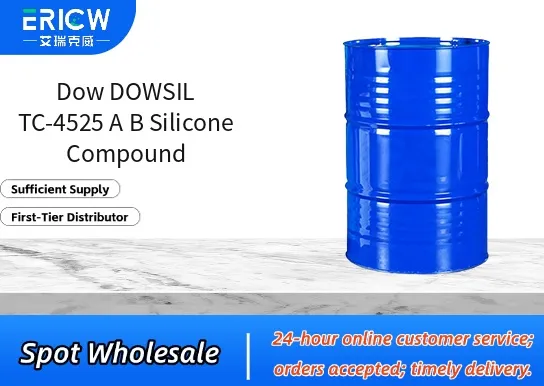
Two-part, addition-cure silicone compound offering excellent thermal conductivity and electrical insulation.
Low viscosity in mixed state for easy dispensing and gap-filling in complex geometries.
UL 94 V-0 rated for flame retardancy, supporting safety-critical electronic applications.
Stable performance across wide temperature range (–40 °C to +180 °C) after full cure.
No by-products generated during curing — ideal for hermetic and sensitive component encapsulation.
Thermal interface material (TIM) for power electronics and IGBT modules.
Encapsulation and potting of LED drivers and automotive control units.
Gap-filling under high-power semiconductor devices and battery management systems (BMS).
Thermally conductive bonding in electric vehicle (EV) traction inverters and onboard chargers.
| Chemical Type | Platinum-catalyzed addition-cure silicone elastomer |
| Product Form | Two-component liquid (Part A + Part B) |
| Appearance | Opaque white paste (Part A), translucent beige paste (Part B) |
| Primary Applications | Thermal management, electrical insulation, and protective encapsulation |
| Key Features | High thermal conductivity (~2.5 W/m·K), low thermal resistance, non-corrosive |
| Benefits | Improved heat dissipation, long-term reliability under thermal cycling, RoHS compliant |
| Cure System | Room temperature or elevated temperature (e.g., 60–125 °C) addition cure |
| Shelf Life | 12 months at 25 °C unopened; refrigerated storage recommended for extended stability |
Q1: What is the primary function of DOWSIL TC-4525 A B in thermal interface materials?
A: DOWSIL TC-4525 A B is a two-part addition-cure silicone compound engineered to provide stable thermal conductivity and low interfacial resistance in gap-filling applications, particularly where long-term reliability under thermal cycling is required.
Q2: How does the A:B mixing ratio affect processing and final properties?
A: The compound is formulated for a precise 1:1 by volume or weight mixing ratio. Deviations may impact cure kinetics, mechanical integrity, and thermal performance—consistent metering and thorough mixing are essential for optimal results.
Q3: Is post-cure required to achieve full thermal and mechanical stability?
A: While the compound achieves functional cure at room temperature, a controlled thermal post-cure (e.g., 60–125 °C for 30–120 minutes) is recommended to maximize crosslink density, long-term compression set resistance, and thermal conductivity consistency.
Q4: Can DOWSIL TC-4525 A B be used in direct contact with sensitive electronic components?
A: Yes—it is formulated to be electrically insulating and non-corrosive, with low ionic impurity content, making it suitable for direct application on PCBs, power modules, and other electronics where galvanic corrosion or leakage current must be avoided.
Contact With Us:
E-mail: wangxingqiang@ericwchem.com
Have a Questions? Call Us:
Add:
Building A1, Jiete Industrial Park, Huangpu District, Guangzhou City, Guangdong Province, China