English
 Español
 tiếng việt
 русский
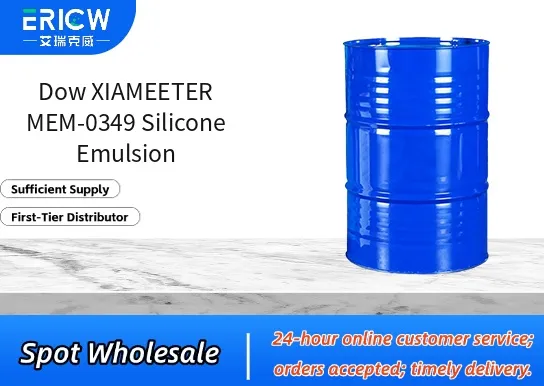
Highly stable anionic silicone emulsion with excellent shelf life under standard storage conditions.
Provides superior lubricity and surface slip for textile and nonwoven finishing applications.
Offers low surface tension and strong substrate wetting on hydrophilic and hydrophobic fibers.
Compatible with common textile auxiliaries including softeners, binders, and crosslinkers.
Enables durable hydrophobicity and improved fabric handle without compromising breathability.
Textile softening and handle modification for cotton, polyester, and blends.
Nonwoven fabric finishing for medical gowns, wipes, and filtration media.
Leather surface treatment to enhance smoothness and water repellency.
Coating additive for improving release properties in paper and film laminates.
| Chemical Type | Anionic polydimethylsiloxane (PDMS) emulsion |
| Product Form | Aqueous emulsion |
| Appearance | Opaque white liquid |
| pH (1% aqueous solution) | 5.5–7.0 |
| Active Content | 30 ± 1 wt% |
| Viscosity (25°C, mPa·s) | 100–300 (Brookfield RV, spindle #3, 12 rpm) |
| Particle Size (D50) | 0.2–0.5 µm |
| Freeze-Thaw Stability | Passes 3 cycles (-5°C/24 h → 25°C/24 h) |
Q1: What is the primary function of Dow XIAMEETER MEM-0349 in industrial formulations?
A: Dow XIAMEETER MEM-0349 is a non-ionic, anionic-stabilized silicone emulsion designed to provide surface modification, lubricity, and release performance in water-based systems. It is commonly used to enhance substrate wetting, reduce friction, and improve slip and anti-blocking properties in coatings, adhesives, and textile treatments.
Q2: Is MEM-0349 compatible with cationic or highly acidic systems?
A: MEM-0349 is formulated for stability in neutral to mildly alkaline aqueous environments. Compatibility with strongly cationic or highly acidic systems may be limited due to potential destabilization of the emulsion; compatibility testing under actual formulation conditions is recommended before full-scale integration.
Q3: How should MEM-0349 be incorporated into a water-based formulation?
A: MEM-0349 is typically added during the final stages of formulation, after high-shear mixing has subsided, to preserve emulsion integrity. It can be diluted with deionized water prior to addition if needed, and gentle agitation is advised to ensure uniform dispersion without excessive foaming.
Q4: Does MEM-0349 require post-application curing or thermal activation to develop its full functionality?
A: No thermal curing is required — MEM-0349 functions effectively at ambient temperatures once properly dispersed and dried. Its silicone components migrate to the surface during film formation, delivering performance without additional heat treatment.
Contact With Us:
E-mail: wangxingqiang@ericwchem.com
Have a Questions? Call Us:
Add:
Building A1, Jiete Industrial Park, Huangpu District, Guangzhou City, Guangdong Province, China