English
 Español
 tiếng việt
 русский
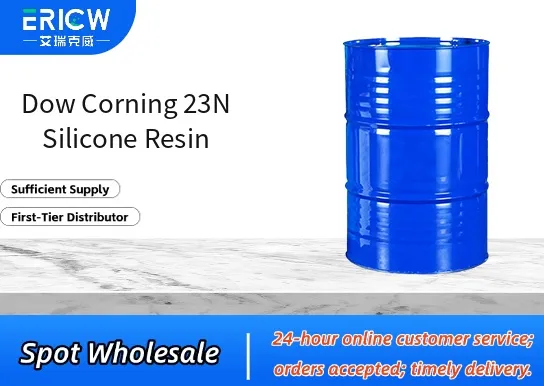
High thermal stability for continuous service up to 200 °C.
Excellent electrical insulation properties across wide temperature and frequency ranges.
Good adhesion to metals, ceramics, and common industrial substrates without primers.
Low surface energy and hydrophobic nature providing moisture resistance.
Compatible with organic solvents and suitable for solvent-based coating formulations.
Electrical insulation coatings for motor windings and transformers.
Heat-resistant protective coatings for automotive under-hood components.
Release coatings for high-temperature composite molding tools.
Binders in high-performance refractory and ceramic fiber mats.
Base resin in specialty silicone varnishes and impregnating resins.
| Chemical Type | Methyl-phenyl silicone resin |
| Product Form | Clear to light amber liquid |
| Appearance | Homogeneous, low-viscosity solution |
| Solvent System | Toluene and xylene blend |
| Solids Content | 50 ± 2 wt% |
| Viscosity (25 °C) | 15–25 cP |
| Specific Gravity (25 °C) | 0.92–0.96 g/cm³ |
| Flash Point (Tag Closed Cup) | Approx. 45 °C |
Q1: What is the primary function of Dow Corning® 23N Silicone Resin in coating and ink formulations?
A: Dow Corning® 23N is a methyl-phenyl silicone resin designed to enhance surface properties—particularly slip, mar resistance, and substrate wetting—when incorporated into solvent-based and high-solids coatings, inks, and overprint varnishes.
Q2: Is Dow Corning 23N compatible with common organic resin systems?
A: Yes, it demonstrates good compatibility with acrylics, polyesters, alkyds, and nitrocellulose resins. Compatibility should be verified empirically in the final formulation due to sensitivity to polarity, molecular weight, and solvent composition.
Q3: How is Dow Corning 23N typically incorporated into a formulation?
A: It is generally added during the let-down or post-additive stage, dissolved in compatible solvents such as xylene, toluene, or acetate esters. Pre-dilution may improve dispersion uniformity and reduce the risk of haze or phase separation.
Q4: Does Dow Corning 23N provide thermal stability benefits in cured films?
A: Yes, its methyl-phenyl silicone structure contributes to improved thermal endurance and oxidative stability in the final film, supporting performance in applications exposed to elevated processing or service temperatures.
Contact With Us:
E-mail: wangxingqiang@ericwchem.com
Have a Questions? Call Us:
Add:
Building A1, Jiete Industrial Park, Huangpu District, Guangzhou City, Guangdong Province, China