English
 Español
 tiếng việt
 русский
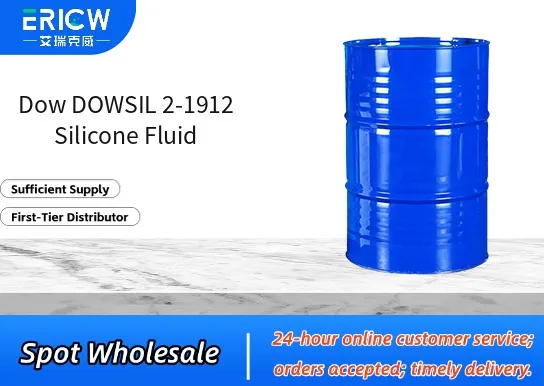
High thermal stability for consistent performance across wide temperature ranges.
Excellent hydrophobicity and moisture resistance for reliable protection in humid environments.
Low surface tension enabling superior wetting and leveling on diverse substrates.
Non-volatile and low odor, supporting safer handling and compliance with industrial hygiene standards.
Compatible with common organic solvents and silicone-based systems for flexible formulation integration.
Release agents for rubber, plastic, and composite molding processes.
Component in lubricating greases for high-temperature industrial equipment.
Carrier fluid in pesticide and agrochemical formulations.
Base fluid in personal care emulsions requiring skin compatibility and sensory elegance.
Additive in specialty coatings to enhance water repellency and substrate adhesion.
| Chemical Type | Linear polydimethylsiloxane (PDMS) |
| Product Form | Clear, colorless liquid |
| Appearance | Transparent, mobile liquid |
| Viscosity (25°C, cSt) | 1,000 ± 100 |
| Density (25°C, g/cm³) | 0.97–0.98 |
| Refractive Index (25°C) | 1.402–1.406 |
| Volatile Content (wt%, 200°C/2h) | <1.0% |
| Flash Point (PMCC, °C) | >300 |
Q1: What is the primary function of DOWSIL 2-1912 Silicone Fluid in formulations?
A: DOWSIL 2-1912 is a low-viscosity, reactive silicone fluid designed primarily as a surface modifier and release agent. It imparts lubricity, improves substrate wetting, reduces surface tension, and enhances slip and mar resistance in coatings, inks, adhesives, and sealants.
Q2: Is DOWSIL 2-1912 compatible with common organic solvent-based and waterborne systems?
A: Yes — DOWSIL 2-1912 exhibits broad compatibility with both solvent-borne and waterborne systems, including acrylics, polyurethanes, alkyds, and epoxy resins. In waterborne formulations, it may require mild agitation or pre-dilution to ensure uniform dispersion.
Q3: How is DOWSIL 2-1912 typically incorporated into a formulation?
A: It is generally added during the let-down or post-additive stage under moderate agitation. Due to its reactivity, incorporation at temperatures below 60 °C is recommended to avoid premature interaction with other functional components. Dosage depends on formulation requirements but typically ranges from 0.1% to 2% by weight of the total formulation.
Q4: Does DOWSIL 2-1912 provide long-term stability in cured films?
A: Yes — once covalently bonded via its reactive silanol groups during cure or ambient crosslinking, DOWSIL 2-1912 becomes an integral part of the polymer matrix, offering excellent migration resistance and sustained surface performance without bloom or leaching.
Contact With Us:
E-mail: wangxingqiang@ericwchem.com
Have a Questions? Call Us:
Add:
Building A1, Jiete Industrial Park, Huangpu District, Guangzhou City, Guangdong Province, China