English
 Español
 tiếng việt
 русский
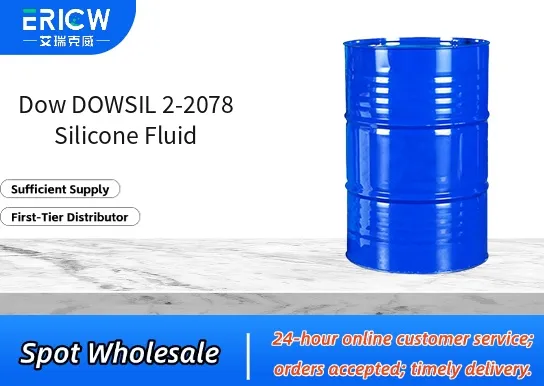
High-purity, low-volatility linear polydimethylsiloxane (PDMS) fluid with excellent thermal stability.
Consistent viscosity performance across a wide temperature range (−50 °C to +200 °C).
Low surface tension and superior spreading/wetting characteristics on diverse substrates.
Chemically inert and compatible with most plastics, elastomers, and coatings.
Meets ISO 10993 biocompatibility requirements for non-implantable medical device applications.
Lubricant for precision mechanical assemblies in automotive and aerospace systems.
Base fluid in specialty release agents for composite molding and rubber processing.
Carrier fluid in personal care formulations requiring high sensory elegance and spreadability.
Dielectric coolant in high-voltage electronic potting and encapsulation compounds.
Processing aid in silicone rubber compound manufacturing for improved filler dispersion.
| Chemical Type | Linear polydimethylsiloxane (PDMS) |
| Product Form | Liquid |
| Appearance | Clear, colorless, odorless liquid |
| Viscosity (25 °C, cSt) | 2,000 ± 10% |
| Density (25 °C, g/cm³) | 0.96–0.97 |
| Flash Point (PMCC, °C) | ≥ 300 |
| Volatile Content (150 °C/16 h, wt%) | ≤ 0.5 |
| Refractive Index (25 °C) | 1.402–1.406 |
Q1: What is the primary function of DOWSIL 2-2078 Silicone Fluid in formulations?
A: DOWSIL 2-2078 is a low-viscosity, reactive silicone fluid designed primarily as a surface modifier and release aid. It imparts lubricity, improves substrate wetting, reduces surface tension, and enhances slip and anti-blocking performance—especially in coatings, inks, adhesives, and personal care emulsions.
Q2: Is DOWSIL 2-2078 compatible with water-based systems?
A: Yes, DOWSIL 2-2078 is formulated to be readily dispersible in aqueous systems without requiring high-shear homogenization. It can be incorporated directly into water-based emulsions or used with mild stirring, though optimal dispersion may benefit from pre-dilution or addition during the aqueous phase incorporation step.
Q3: How does DOWSIL 2-2078 differ from non-reactive silicone fluids?
A: Unlike non-reactive silicones, DOWSIL 2-2078 contains reactive silanol groups that enable covalent integration into polymer matrices during curing or film formation. This results in improved permanence, reduced migration, and enhanced durability of surface effects—particularly under mechanical stress or thermal exposure.
Q4: What are typical dosage guidelines for DOWSIL 2-2078 in industrial applications?
A: Dosage depends on formulation requirements and desired performance level, but it is typically used at low concentrations—generally ranging from 0.1% to 2% by weight relative to total formulation solids. Start with lower levels and adjust based on compatibility testing and functional evaluation.
Contact With Us:
E-mail: wangxingqiang@ericwchem.com
Have a Questions? Call Us:
Add:
Building A1, Jiete Industrial Park, Huangpu District, Guangzhou City, Guangdong Province, China