English
 Español
 tiếng việt
 русский
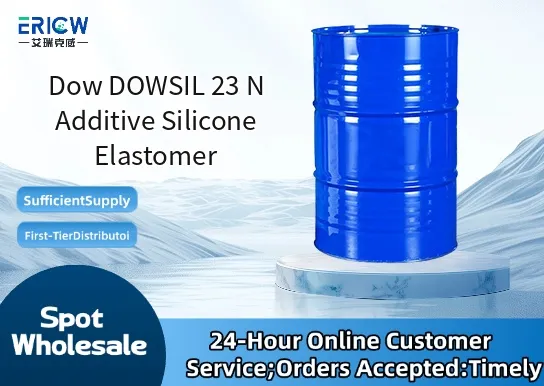
Enhances surface softness and tactile feel in thermoplastic elastomers (TPEs) and polyolefins without compromising mechanical integrity.
Offers excellent compatibility with common polymer matrices including PP, PE, SEBS, and TPE-S blends.
Provides low-migration performance, minimizing bloom and maintaining long-term surface aesthetics.
Enables efficient dispersion at low addition levels (typically 1–5 wt%), supporting cost-effective formulation.
Improves scratch resistance and abrasion durability while retaining substrate flexibility and processability.
Soft-touch overmolding for automotive interior components (e.g., instrument panels, door trims).
Tactile enhancement in consumer electronics housings and wearable device enclosures.
Surface modification of medical device grips and ergonomic handles requiring skin-friendly texture.
Functional additive in flexible packaging films where slip control and haptic quality are critical.
Performance modifier in specialty adhesives and sealants seeking improved conformability and skin contact comfort.
| Chemical Type | High-molecular-weight silicone elastomer dispersion |
| Product Form | Pellets (free-flowing, non-dusting) |
| Appearance | Off-white to light beige semi-crystalline pellets |
| Primary Applications | Soft-touch additive for thermoplastics and elastomeric compounds |
| Key Features | Low-migration, high-compatibility, thermally stable up to 230°C |
| Benefits | Improved haptics, enhanced scratch resistance, consistent dispersion |
| Recommended Loading Range | 1–5 wt% depending on polymer system and performance target |
| Storage Conditions | Store in original unopened container at 15–25°C; protect from moisture and direct sunlight |
Q1: What is the primary function of DOWSIL 23 N in coating and ink formulations?
A: DOWSIL 23 N is a silicone-based additive elastomer designed to enhance surface slip, improve mar resistance, and reduce coefficient of friction in solventborne and radiation-curable coatings, inks, and overprint varnishes. It forms a soft, flexible silicone-rich layer at the film surface without significantly affecting substrate adhesion or gloss.
Q2: Is DOWSIL 23 N compatible with UV-curable systems?
A: Yes — DOWSIL 23 N is formulated for compatibility with common acrylate-based UV-curable resins and monomers. It remains stable during UV exposure and does not interfere with photoinitiator efficiency or cure speed under typical processing conditions.
Q3: How should DOWSIL 23 N be incorporated into a formulation?
A: It is typically added during the let-down stage under moderate agitation. Pre-dilution in a compatible solvent or carrier resin is recommended for optimal dispersion. Avoid high-shear mixing that may degrade the elastomeric structure, and ensure sufficient dispersion time to achieve uniform distribution before final filtration.
Q4: Does DOWSIL 23 N affect substrate adhesion or printability?
A: When used within recommended dosage ranges, DOWSIL 23 N generally maintains good intercoat adhesion and does not hinder subsequent printing or lamination. However, excessive loading may lead to surface blooming or reduced interfacial bonding; formulation optimization is advised for critical multilayer applications.
Contact With Us:
E-mail: wangxingqiang@ericwchem.com
Have a Questions? Call Us:
Add:
Building A1, Jiete Industrial Park, Huangpu District, Guangzhou City, Guangdong Province, China